Hypermart Indonesia Transforms Checkout Operations with Telpo K10 Bill Payment Kiosk Machines

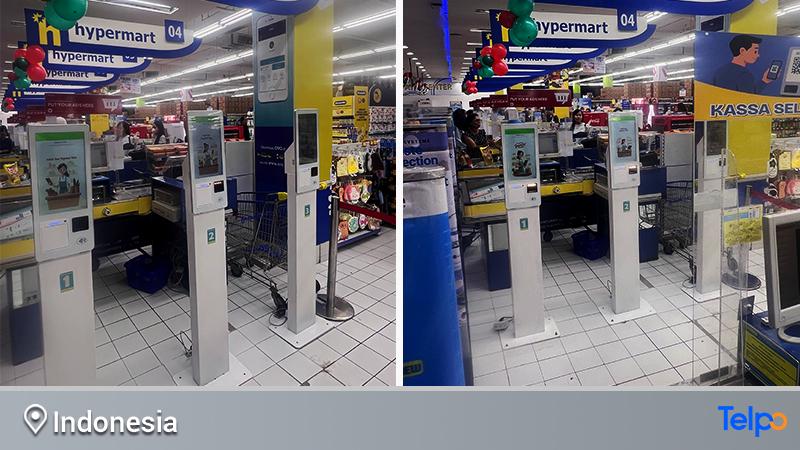
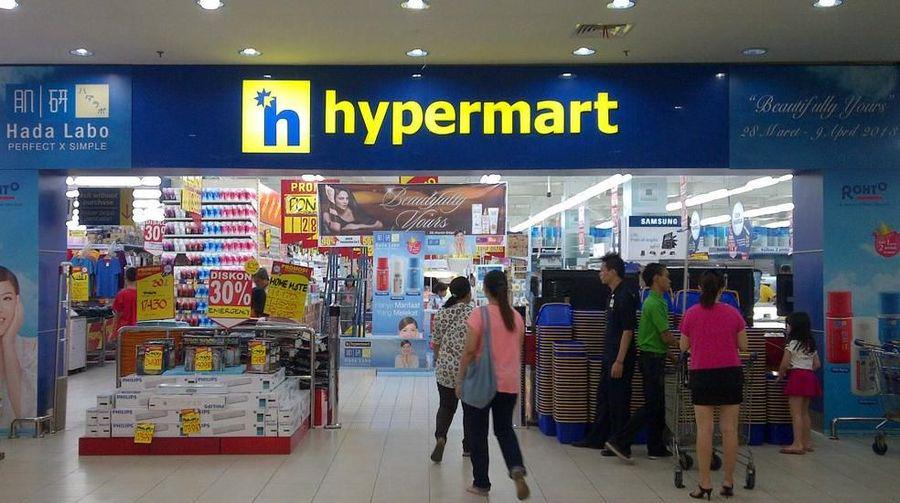
Indonesia’s retail landscape is evolving rapidly, and Hypermart, one of the country’s largest supermarket chains, is leading this transformation. By implementing self-checkout machine supermarket solutions, Hypermart has revolutionised its customer experience while significantly improving operational efficiency. At the heart of this transformation lies the Telpo K10, a compact yet powerful self-service kiosk pos system that’s redefining what modern grocery retailers can achieve.
 
 
self checkout machine supermarket


Traditional Checkout Bottlenecks in Large-Format Retail

 
Before adopting self-service technology, Hypermart faced familiar pain points that plague high-traffic supermarkets worldwide. Long checkout queues during peak hours frustrated customers, while labour costs continued to climb. Staff members spent valuable time on repetitive scanning tasks rather than assisting customers with product inquiries or store navigation. The traditional manned checkout model couldn’t scale efficiently to meet growing customer demands without proportional increases in operational expenses.


Why Hypermart Chose the Telpo K10 Self Cashier Machine

 
When evaluating grocery store self-checkout machines, Hypermart’s management prioritised several critical factors: space efficiency, deployment flexibility, and total cost of ownership. The Telpo K10 emerged as the ideal solution, offering a unique combination of compact design and enterprise-grade performance.


Space-Optimised Design for High-Density Retail Environments

 
The K10’s 15.6-inch ultra-compact display proved perfect for Hypermart’s floor plan optimisation strategy. Weighing just 4.29 kilograms, these self-service cashier machinesallowed the chain to deploy multiple units without the heavy infrastructure requirements of traditional checkout lanes. The lightweight design also dramatically reduced transportation and installation costs across Hypermart’s extensive network of stores throughout Indonesia.


Flexible Configuration Options

 
One standout feature that sealed the deal was the K10’s adaptability. Telpo provided both desktop and floor-stand mounting brackets, enabling Hypermart to configure checkout zones based on specific store layouts. This flexibility exemplifies Telpo’s strength as a kiosk machine manufacturercapable of delivering tailored solutions rather than one-size-fits-all products.


The K10 Self-Service Kiosk POS Delivers Enterprise-Grade Performance


Performance That Matches Retail Demands

 
Under the hood, the K10 self-service scanner operates on an octa-core 2.2GHz processor, paired with Android 14, to deliver the responsive performance critical for high-volume retail environments. The sensitive touchscreen provides smooth, intuitive interaction—essential when serving customers of varying tech-literacy levels. This processing power ensures that scanning, payment processing, and receipt generation occur without frustrating delays.


Comprehensive Payment Acceptance

 
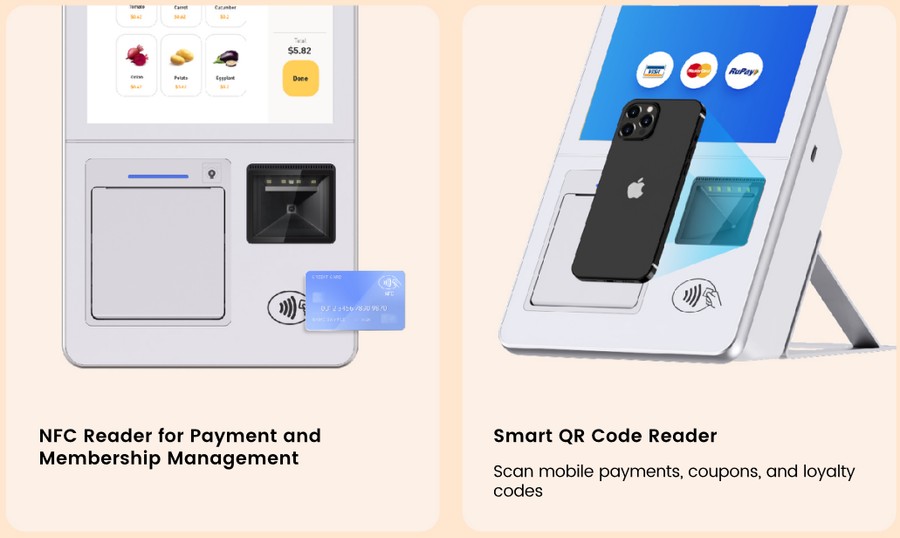
Modern Indonesian consumers expect payment flexibility, and the Telpo K10 delivers. The integrated bill payment kiosk machine capabilities support NFC transactions, QR code scanning, and traditional POS bracket compatibility for smart cards, magnetic stripe cards, and mobile wallets. This versatility means Hypermart customers can pay however they prefer—from contactless cards to popular Indonesian e-wallet platforms, such as GoPay and OVO.


Hypermart Achieves Measurable Operational Transformation


Improved Customer Experience

 
The implementation of Telpo’s self-service cashier machine solutions has fundamentally changed the Hypermart shopping experience. Customers now enjoy:
  • Reduced wait times: Average checkout time decreased by 40% during peak hours
  • Shopping autonomy: Self-scanning capabilities put customers in control of their checkout pace
  • Privacy during transactions: Personal purchases can be processed discreetly
  • Multilingual support: Android-based interface easily accommodates Indonesia’s linguistic diversity


Operational Efficiency Gains

 
From a business perspective, the transformation delivered measurable results:
  • Labour optimisation: Staff previously assigned to repetitive scanning tasks were redeployed to customer service roles, inventory management, and high-value activities that enhance the overall shopping environment.
  • Throughput improvement: Each K10 unit handles transaction volumes comparable to traditional manned checkouts, but with significantly lower per-transaction costs.
  • Space utilisation: The compact footprint freed up valuable square footage for expanded product displays and customer amenities.
  • Scalability: The 4.29kg weight and straightforward installation process meant Hypermart could rapidly deploy additional units during promotional periods or seasonal peaks without major infrastructure modifications.
 

Telpo Delivers Comprehensive Hardware Customisation Capabilities
 
self service kiosk pos system
 
 
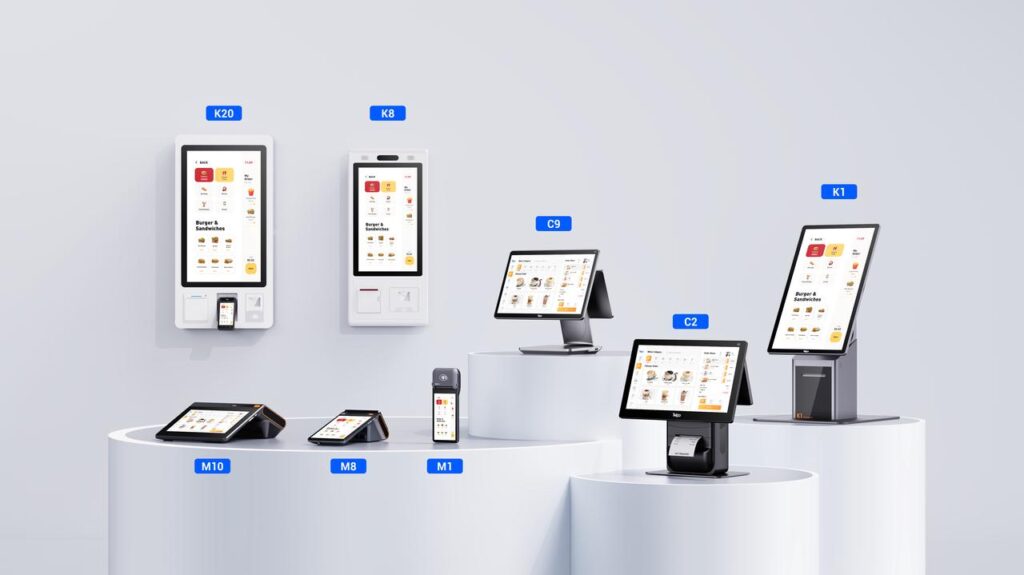
Beyond the K10’s impressive standard specifications, Telpo’s true competitive advantage lies in its comprehensive hardware customisation capabilities. As an established custom smart terminal provider, Telpo brings extensive ODM (Original Design Manufacturing) experience to retail partners worldwide.


Flexible Hardware Configuration


Telpo’s engineering team specialises in adapting terminal hardware to match specific operational environments. This includes scenario-specific configurations such as selecting optimal display sizes for different retail formats, integrating specific peripheral devices like barcode scanners or receipt printers, and configuring payment hardware modules to support regional payment standards.


Physical Design Customisation


Recognising that retail spaces and brand identities vary dramatically, Telpo offers comprehensive physical customisation options. Their design capabilities encompass form factor adjustments to fit unique spatial constraints, custom enclosure designs that incorporate client branding elements, multiple mounting configurations from countertop to floor-standing pedestals, and dimensional modifications to optimise ergonomics for specific user demographics.


Manufacturing Excellence


With advanced production facilities and rigorous quality control processes, Telpo delivers enterprise-grade reliability at scale. Their manufacturing expertise ensures consistent product quality, whether deploying ten units or ten thousand, making them an ideal partner for both regional chains and international retail groups expanding across multiple markets. Explore Telpo’s complete custom smart terminal capabilities to understand how hardware customisation can address specific deployment requirements.


Which Telpo Self-Checkout Machine Is Right for Your Store? 

 
Dimension

Telpo K10

self service machine

Telpo K8M

self checkout machine

Telpo K20

self ordering kiosk

Screen Size 15.6″ 21.5″  27″ 
OS Options Android 14 Android 14/ Windows 10 Android 12 / Windows 10
Processor Octa-Core 2.2GHz Hexa-Core 1.8GHz (Android) / Intel Core i3-1315U (Windows) Octa-Core 2.4GHz/ Intel Core i3-1315U (Windows)
Thermal Printer 80mm 80mm 80mm
Built-in Barcode Scanner Support Support Support
NFC / Contactless Payment Optional Optional Optional
Face Recognition Optional (RGB+IR dual-lens) Optional (single-lens / dual-lens / 3D depth sensing) Optional
Windows OS Option ✔ (Intel Core i3, 8GB/256GB) ✔ (Intel Core i3, 8GB/256GB)
Mounting Options Desk-stand / Wall-mount  Wall-mount / Desk-stand / Floor-stand / Checkout desk Wall-mount / Floor-stand
Weight 4.29 kg ~18 kg ~24.5 kg
MDM Support Optional Optional Optional
Best For Space-constrained counters, multi-location rollouts, lightweight deployment Mid-size supermarkets and retail chains needing a full-featured checkout station with optional Windows OS High-volume QSRs, food courts, large-format retail flagship stores


The Future of Self-Service Retail in Indonesia


Hypermart’s successful deployment demonstrates that Indonesian consumers are ready to embrace self-service technology when it’s implemented thoughtfully. The K10’s intuitive interface proved accessible even to first-time users, dispelling concerns about technology adoption barriers in emerging markets.
For retailers considering similar transformations, the Hypermart case study offers valuable lessons:
  1. Start with hardware flexibility: Choose self-service terminal solutions that can adapt to diverse store formats
  2. Prioritise payment versatility: Ensure your smart self-service kiosk accepts all popular local payment methods
  3. Invest in customisation: Work with manufacturers capable of scenario-specific adaptations
  4. Plan for gradual adoption: Maintain hybrid checkout options during customer transition periods


Small Footprint, Transformative Impact


The Telpo K10 proves that powerful retail technology doesn’t require massive infrastructure investments or complicated installations. Its compact 15.6-inch form factor, sub-5kg weight, and flexible mounting options make it the ideal self-checkout machine supermarket solution for retailers of any scale.
Hypermart’s transformation from traditional checkout lanes to AI-powered self-service zones showcases what’s possible when hardware innovation meets thoughtful implementation strategy. The result is a win-win: customers enjoy faster, more convenient shopping experiences, while operators benefit from improved efficiency and reduced operational costs.
Ready to transform your retail checkout operations? Explore Telpo’s complete range of self-service payment terminals and discover how custom configuration can address your unique operational challenges. As a trusted kiosk machine manufacturer, Telpo delivers solutions that scale with your business ambitions.


FAQ


Q1: What is the difference between a self-checkout machine and a traditional manned cashier counter? A traditional manned cashier requires a staff member to scan items, confirm prices, and process payment for every customer transaction. A self-checkout machine transfers all three steps to the customer — they scan their own items using the built-in barcode reader, review the total on the touchscreen, and pay via QR code, NFC, card, or mobile wallet, with no staff involvement required. The practical result is shorter queues during peak hours, lower per-transaction labour cost, and staff freed up for customer service, restocking, and store management tasks that add more value than repetitive scanning.


Q2: How do self-checkout machines handle payment security? Telpo’s self-checkout kiosks accept payments through certified external EFTPOS modules — meaning the payment hardware (card reader, PIN pad) meets the same EMV and PCI security standards as a dedicated payment terminal. NFC contactless transactions, QR code payments, and mobile wallets are also processed through encrypted channels. The kiosk display itself handles the product selection and order confirmation layer; the payment is handled by a separate, compliant hardware module, which is the same security model used in most large retail chains globally.


Q3: Is a self-checkout machine suitable for a smaller independent supermarket, not just large chains? Yes, particularly the Telpo K10. Its compact 15.6″ form factor, 6.3 kg weight, and flexible desk-stand or wall-mount options make it practical for small to mid-size retail environments where floor space is limited and a large freestanding kiosk would be impractical. A single K10 unit can meaningfully reduce queue pressure during peak hours without requiring infrastructure changes or significant counter modification. For smaller operators, the K10 is the lowest-barrier entry point to self-checkout technology.


Q4: How do retailers manage and update software across multiple self-checkout machines? All three Telpo models — K10, K8M, and K20 — support Telpo MDM (Mobile Device Management), which allows operators to remotely monitor device status, push software and firmware updates, manage app installations, and configure settings across an entire fleet from a central dashboard. For retailers operating dozens or hundreds of units across multiple store locations, this eliminates the need for on-site technical visits for routine updates and significantly reduces fleet management overhead.

Scroll to Top

Contact Telpo

Global Contact

Contact Telpo

Bottom Contact