
AI has made hardware design more diverse than ever—self-checkout with visual recognition, edge AI boxes, biometric tablets with FBI-certified sensors. But a brilliant design means nothing if the POS terminal manufacturer behind it cannot scale, certify, and ship on time.
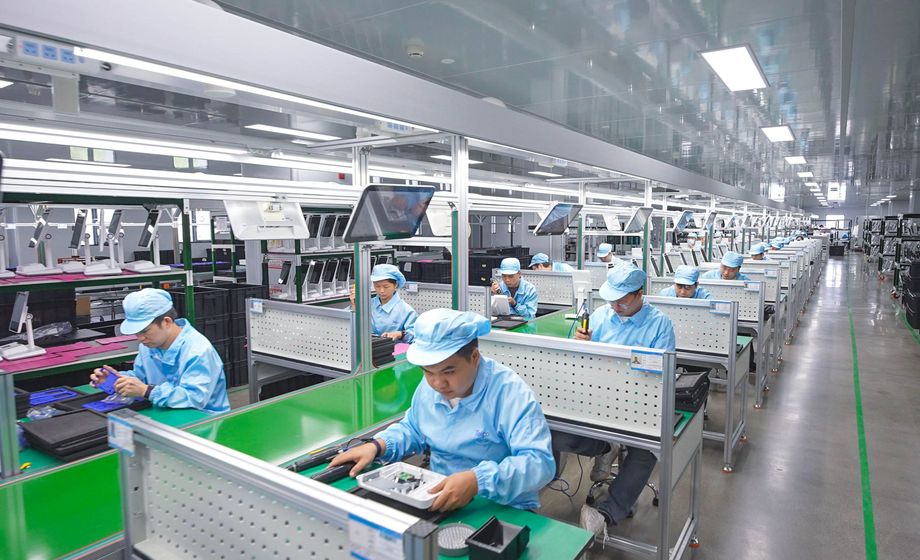
This is the central problem in OEM/ODM POS terminal manufacturing: not whether a design can be built, but whether it can be built reliably at volume, with full-chain customization from ID design to global certification.
Telpo Technology Co., Ltd. has manufactured custom POS hardware since 1999. The company runs a 45,000 sqm facility in Foshan with a CNAS-accredited lab, 2 million units annual capacity, and 67 global certifications. This article explains how Telpo’s model works, what evidence buyers should demand, and where its capabilities end.
Table of Contents
- Why Full-Chain Customization Beats Fragmented Vendor Management
- Three Tiers of OEM/ODM Engagement
- Level 1 Branding: Available Models
- AI and Edge Capabilities
- Certification Matrix by Market
- Field Evidence from Deployed Fleets
- Reliability, Confidentiality, and Supply Assurance
- What Telpo Does Not Do
- FAQ
- Key Takeaways
Why Full-Chain Customization Beats Fragmented Vendor Management
Most hardware buyers underestimate coordination cost. When ID design, structural engineering, PCB layout, OS customization, mold creation, and global certification are split across four or five vendors, the buyer becomes the integration layer. That model works until a defect appears—then every vendor points at the others, and the project stalls.
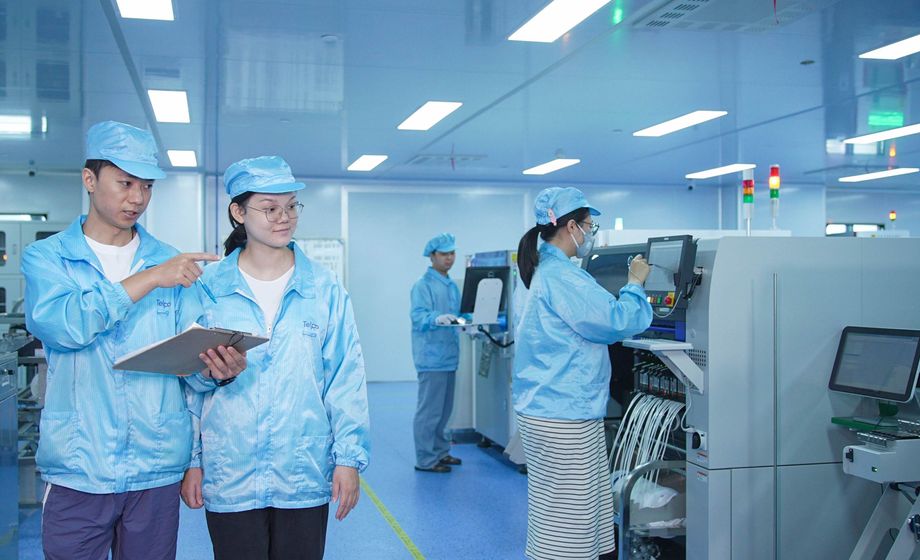
Telpo runs the opposite structure. Industrial design, mechanical engineering, PCB development, firmware, Android/Linux/Windows OS customization, mold tooling, and certification filing are managed under one roof. This is not a marketing claim. It is a structural difference that shows up in project timelines, defect accountability, and the ability to execute design changes mid-stream without re-negotiating contracts across multiple parties.
“Telpo is one of those industry players that keep on cranking.”
The company has shipped hardware to 100+ countries, with an export ratio of 60–80%. Every unit undergoes 100% functional testing in a CNAS-accredited lab before it leaves the factory.
Three Tiers of OEM/ODM Engagement
Telpo organizes its OEM/ODM POS terminal manufacturing services into three levels. Choosing the wrong tier is the most common mistake buyers make when selecting a POS terminal manufacturer.
|
Tier |
Scope |
Lead Time |
Typical MOQ |
|
Level 1: Branding |
Logo, boot animation, UI theme, custom color housing, branded packaging |
Stock: 3–15 days; Bulk: 15–45 days |
Flexible; samples individually |
|
Level 2: Full-Chain ODM |
ID design, structural engineering, hardware module selection, mold creation, OS customization (Android/Linux/Windows) |
4–6 months |
500–1,000 units |
|
Level 3: Software |
Device management platform, custom applications, deep OS customization |
2–3 months |
3,000 units |
Our observation: Most buyers over-specify. If your goal is to launch a branded payment terminal in 30 days, Level 1 on an existing certified platform is the correct choice. Level 2 full-chain customization is for projects that need a unique industrial design or hardware configuration that does not exist in this POS terminal manufacturer’s current catalogue. All is subject to communication with the salesperson.
Level 1 Branding: Available POS Terminal Models
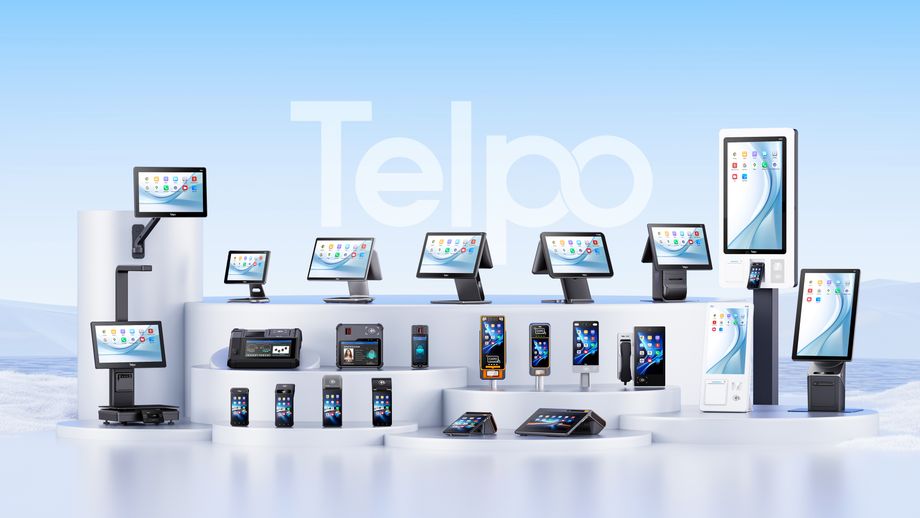
The following models are available for immediate custom POS hardware branding with flexible MOQ. These are the fastest path to market for buyers who need certified OEM/ODM POS terminal devices without the 4–6 month ODM cycle.
|
Model |
Form Factor |
Standout Spec |
Key Interfaces |
|
Handheld payment terminal |
Fully certified, such as PCI-PTS 6.x, EMV; 5000mAh (17–23 hrs); |
USB-Type C, 4G LTE, Wi-Fi, BT, GPS |
|
|
Handheld with printer |
Fully certified, such as PCI-PTS 6.x, EMV; 58mm thermal printer (80mm/s); 1.5m drop |
USB-Type C, 4G, BT, Wi-Fi |
|
|
Desktop dual-screen POS |
SoftPOS-ready NFC; 110mm/s printer; Red Dot winner; Dual Screen(8″+3″) |
Dual-screen, NFC, USB, Ethernet |
|
|
M10 |
Desktop dual-screen POS |
SoftPOS-ready NFC; 200mm/s industrial printer; Red Dot winner; Dual Screen(10″+4″) |
Dual-screen, NFC, USB, Ethernet |
|
Android cash register |
NFC reader; Pogo Pin modular expansion; Fingerprint ID security |
Pogo Pin, USB, Ethernet, Wi-Fi |
|
|
Self-service kiosk |
21.5″ screen, NFC reader; Pogo Pin expansion; supports Ingenico bank card reader modules |
Pogo Pin, USB, Ethernet, Wi-Fi |
|
|
K10 |
Compact self-checkout |
15.6″ screen, NFC+QR reader, 4.29kg; 30° tilt; 150–220mm/s printer |
USB, Ethernet, Wi-Fi, BT |
|
Ticket validator |
ISO14443 A/B/Cipurse/Calypso/Felica; IP54/IK07 |
NFC, QR, USB, 4G, Wi-Fi |
|
|
Rugged ticket validator |
IP65/IK08; 8 SAM slots; Linux or Android; Face recognition |
NFC, QR, USB, 4G, Wi-Fi |
|
|
8” biometric tablet |
FBI PIV + Mobile ID FAP20 certified;NFC reader, 1.5m drop |
RS485, Wiegand, relay, 12V access, 48V PoE |
AI and Edge Capabilities
Telpo’s OEM/ODM portfolio extends beyond traditional POS terminals into AI-driven retail and edge computing. For buyers evaluating a POS terminal manufacturer that also delivers AI infrastructure, these capabilities matter.
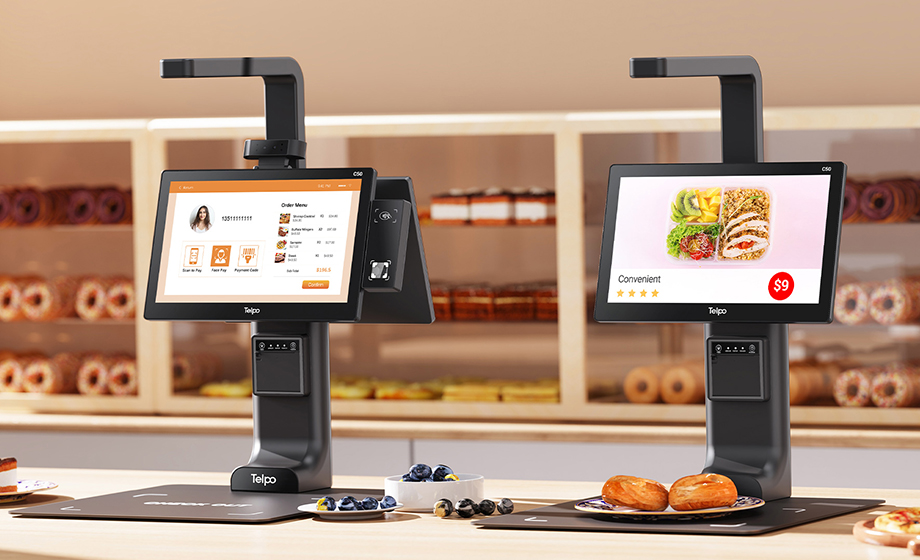
AI self-checkout terminal (C50) uses visual recognition for barcoded and non-barcoded items, with 0.1-second inference and 99.8% accuracy at 12 TOPS compute.
V15B Edge AI Box delivers 6 TOPS NPU performance for on-premise video analytics. It connects to existing surveillance cameras via dual RJ45 Gigabit Ethernet ports with independent NICs, and enriches feeds with people counting, behavior analysis, and access control—without replacing the camera infrastructure. Peripheral connectivity includes RS485, RS232, USB 3.0, GPIO, HDMI, and optional 4G/LTE.
Telpo also develops AI retail device customization and AI service robots for retail and hospitality; specific SKUs should be confirmed with Telpo sales.
Certification Matrix by Market
Certification is a procurement risk vector, not a marketing checkbox. The table below maps Telpo’s most-requested certificates to the models and markets they unlock.
|
Certification |
Models |
Markets |
|
PCI-PTS POI V6.x |
TPS900, P9, P8 |
Global payment networks |
|
EMV Contact L1 & L2 |
TPS900, P9, P8 |
Global |
|
Mastercard Paypass / Visa Paywave |
Multiple |
Global |
|
UnionPay / RuPay / JCB |
Multiple |
China / India / Japan |
|
CE / RoHS / WEEE |
Most models |
EU |
|
FCC |
Most models |
US |
|
BIS |
P9, P8, C9 |
India |
|
IP54 or IP65 / IK07 or IK08 |
T10:IP54, IK07 S9:IP65 T20:IP65, IK08 |
Industrial / Transit / Outdoor |
|
EN50155 / E24 / R118 |
T10, T20 |
EU rail / vehicle |
|
FBI PIV + Mobile ID |
Government / Enterprise biometric |
Limitation: Kiosk machine models (K1, K8, K10, K20) do not carry native PCI-PTS because they typically integrate third-party payment modules. If your OEM/ODM POS terminal project requires kiosk-embedded PCI certification, scope it as a custom engineering task with your POS terminal manufacturer early in the design phase.
Field Evidence from Deployed Fleets
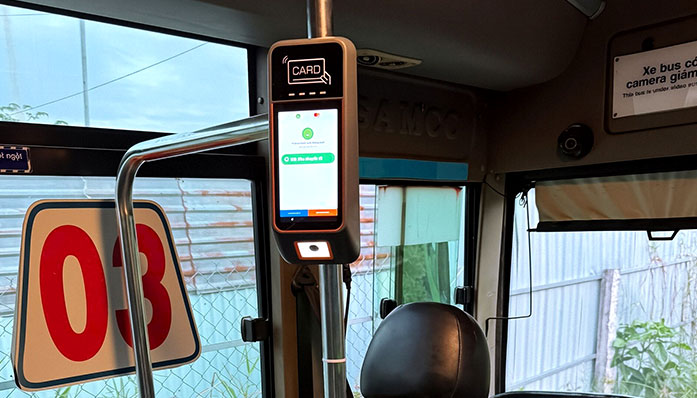
Vietnam — Public Transit (2,000+ T10 units) Commercial banks deployed T10 validators across Vietnamese public transit. Single ticket verification dropped from 5 seconds to 1 second. Ticketing costs decreased by 30%, and the addressable user base grew by 45%. Peak daily volume reached 500,000 transactions.
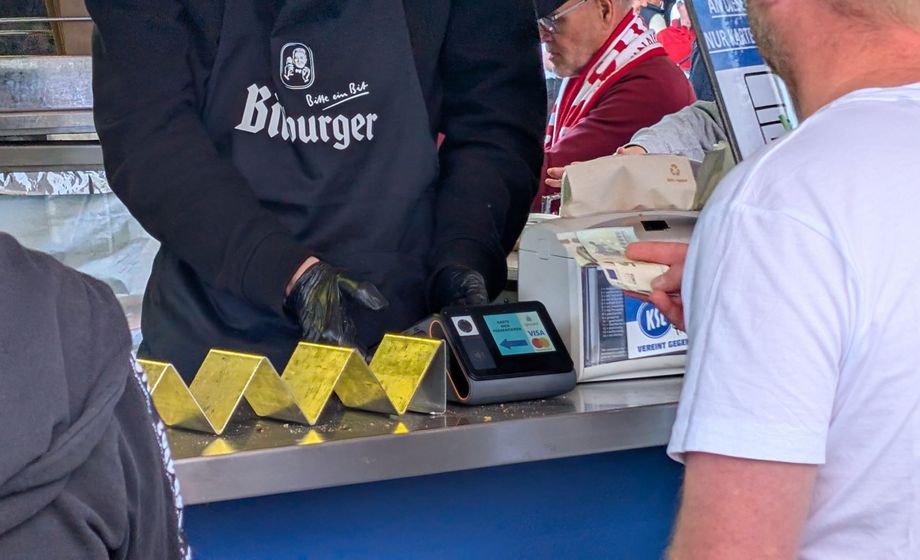
Germany — DFB-Pokal Event (200+ M8 units) A solutions integrator deployed M8 terminals as tap-to-pay stations. Contactless transactions completed in under 2 seconds. Each M8 replaced three separate devices.
China — Convenience Retail (40,000+ stores) A domestic chain deployed K10 and K8 self-checkout terminals over three years. Customer checkout steps dropped from 8 to 4. Average transaction time fell by 35%. Peak daily throughput per unit reached 600 orders.
“This collaboration would not have been possible without the Telpo Team and all parties involved. We suspect this kind of digital service is already standard in shopping malls across China.” — Operations representative, retail chain
Reliability, Confidentiality, and Supply Assurance
- Track Record. Telpo was founded in 1999. It is a National High-Tech Enterprise listed on China’s NEEQ (stock code: 833839). The company has operated continuously for 27 years with a 60–80% export ratio.
- Supply Capacity. The Foshan facility produces 150,000–180,000 units per month. Every unit undergoes 100% functional testing in a CNAS-accredited laboratory before shipment.
- Delivery Commitment. Stock orders ship in 3–15 working days. Bulk orders run 15–45 working days. Full OEM/ODM POS terminal projects average 4–6 months from kickoff to certification-ready production under Telpo’s full-chain customization process.
- Confidentiality. Telpo provides NDA coverage for all ODM engagements. Client designs, firmware, and tooling specifications are held under project-specific confidentiality agreements. Tooling ownership transfers to the client upon project completion where contractually agreed.
- Support Infrastructure. 24/7 remote support is available globally. Telpo MDM provides over-the-air device management, remote diagnostics, and fleet monitoring. On-site field engineering is available directly in Asia and through partner networks in Europe and the Middle East.
What Telpo Does Not Do
- Ultra-low-volume, high-mix customization. If you need 50 units each of 20 different SKUs with unique industrial designs, the NRE cost per SKU becomes prohibitive. Level 2 ODM full-chain customization is designed for single-SKU volumes of 500+.
- Windows-native ecosystems. Select models support Windows 10/11, but Telpo’s deepest engineering investment—custom kernel, MDM integration, payment security hooks—is in Android. Windows deployments may require longer integration timelines.
- Automatic acquirer approval. PCI-PTS and EMV certifications are necessary but not sufficient for payment network approval. Some acquirers require additional lab testing or brand-specific TQM. Confirm your specific acquirer’s approval list before deployment.
FAQ
Q1:What is the difference between OEM and ODM in POS terminal manufacturing?
OEM refers to hardware built to the client’s existing design. ODM involves co-developing the product from concept through ID design, structural engineering, and software customization under a POS terminal manufacturer’s full-chain customization process. Telpo offers both.
Q2: Which models are available for Level 1 branding?
P9, P8 with printer, M8, M10, C9, C9PD, K1, K10, T10, T20, and S9 are available for logo, UI theme, colour housing, and packaging customization with flexible MOQ.
Q3: Does Telpo support Windows POS terminals?
Yes, select kiosk and cash register models support Windows 10/11. However, Telpo’s deepest OS customization and MDM integration are built on Android.
Q4: What certifications does Telpo hold?
67 certificates across PCI-PTS, EMV, Paypass, Paywave, UnionPay, RuPay, JCB, CE, FCC, BIS, EN50155, IP54/65, IK07/08, and FBI PIV/Mobile ID. Coverage varies by model.
Q6: What is Telpo’s production capacity?
2 million units annually; 150,000–180,000 units monthly. All units undergo 100% functional testing in a CNAS-accredited laboratory.
Q7: Can I order samples before committing to volume?
Yes. Standard models are available individually. Trial batches range from 2–50 units.
Key Takeaways
- Telpo offers three OEM/ODM POS terminal manufacturing tiers: Level 1 (branding, fast entry), Level 2 (full-chain ODM, 500+ MOQ), and Level 3 (software, 3,000+ MOQ).
- Eleven primary models are available for immediate Level 1 branding, including the S9 biometric tablet and V15B edge AI box. These custom POS hardware options ship in 3–7 days.
- 67 certifications cover global payment schemes, industrial standards, and biometric security. As an established POS terminal manufacturer, Telpo maintains active certifications across PCI-PTS, EMV, CE, FCC, and FBI biometric standards. Kiosk models typically rely on third-party modules for PCI compliance.
- Field deployments are verified across Vietnam (2,000+ T10), Germany (200+ M8), and China (40,000+ stores).
- AI capabilities span self-checkout visual recognition (C50), edge analytics (V15B with dual RJ45 and RS485/RS232/GPIO), and service robotics.