
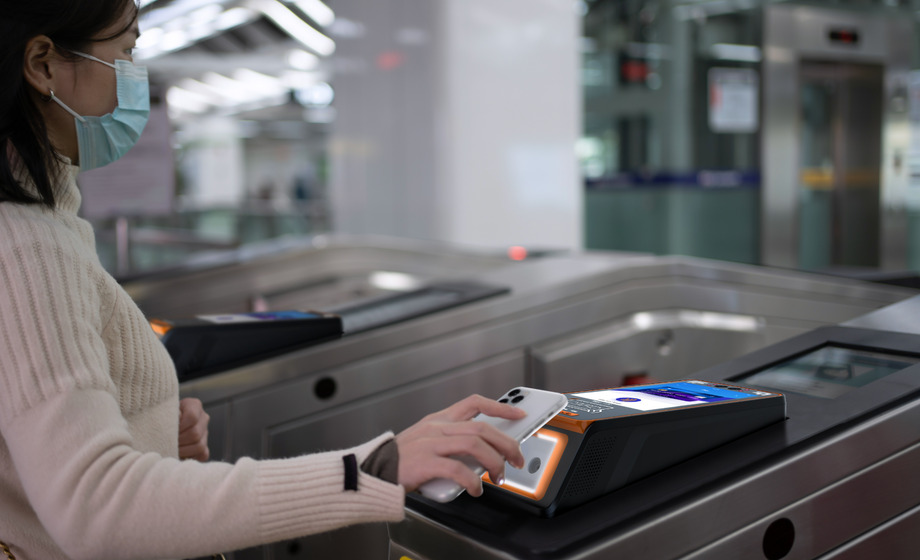
If you are weighing whether to upgrade your fare collection equipment—or just curious how la perception automatisée des péages actually works on a bus—this guide walks you through it. We will look at what a modern validateur de billets can do, where the real savings come from, and how to tell if your fleet is ready for the shift. No sales pitch. Just the practical stuff you need to decide.
Table of Contents
- What Is Fare Collection Equipment?
- How Does Fare Collection Equipment Work?
- Modern Fare Collection Solutions: ABT, cEMV & Multi-Modal Systems
- Advantages and Disadvantages of Fare Collection Equipment
- Global Fare Collection Equipment Suppliers
- Telpo’s Complete Fare Collection Ecosystem
- How to Choose the Right Fare Collection Equipment
- Comparison with Telpo T20 and T10 Specifications
- Frequently Asked Questions (FAQ)
- Conclusion
What Is Fare Collection Equipment?
Fare collection equipment refers to the hardware and software systems used to automate ticket sales, validation, and revenue collection across public transportation networks. The global la perception automatisée des péages (AFC) market was valued at USD 11.6 billion in 2022 et devrait atteindre USD 39.8 billion by 2032, growing at a CAGR of 13.3% (Acumen Research, 2023).
Modern fare collection systems have evolved far beyond simple ticket gates. They now encompass:
- Ticket vending machines (TVMs)— for passenger self-service purchases
- Automatic gate machines (AGMs)— entry/exit control at stations
- Onboard validators— fare verification inside buses and trains
- Central clearing systems— backend transaction processing and settlement
- Mobile and contactless payment terminals— smartphone and card-based payments
The transition from cash-based systems to digital fare collection is accelerating worldwide. Transport operators are adopting these technologies to reduce operational costs, eliminate revenue leakage, improve passenger experience, and gain real-time data insights for network optimisation.
Key application areas include:
- Bus rapid transit (BRT) systems
- Metro and subway networks
- Commuter rail and intercity trains
- Light rail and tram systems
- Parking and multimodal transit hubs
How Does Fare Collection Equipment Work?
A typical la perception automatisée des péages system operates through five integrated layers:
|
Layer |
Components |
Function |
|
Media Layer |
Smart cards, QR codes, mobile apps, contactless bank cards, wearables |
Passengers carry or generate proof of entitlement to travel |
|
Validation Layer |
NFC readers, QR scanners, barcode readers, biometric sensors |
Onboard and station-based devices verify payment or ticket validity |
|
Transaction Layer |
Local processing units, secure elements, SAM modules |
Real-time fare calculation and transaction authorization |
|
Communication Layer |
4G/5G, Wi-Fi, Ethernet, RS485 |
Data transmission between devices and central systems |
|
Back-office Layer |
Revenue management, clearing & settlement, reporting |
Centralized transaction processing, analytics, and operator dashboards |
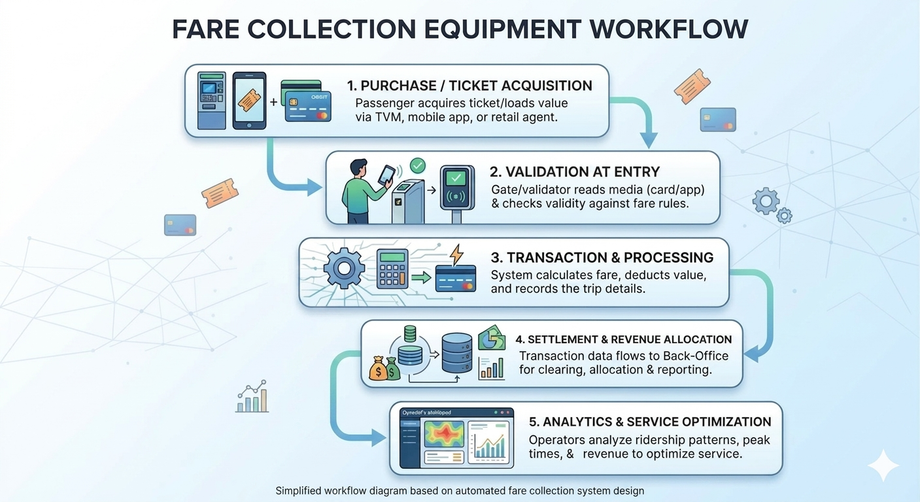
Typical workflow:
- Purchase: A passenger acquires a ticket or loads value via TVM, mobile app, or retail agent
- Validation: At entry (gate or onboard), the validator reads the media and checks validity against fare rules
- Transaction: The system calculates the appropriate fare, deducts the value, and records the trip
- Settlement: Transaction data flows to the back-office for clearing, revenue allocation, and reporting
- Analytics: Operators analyse ridership patterns, peak times, and revenue data to optimize service
Modern Fare Collection Solutions: ABT, cEMV & Multi-Modal Systems
A. Account-Based Ticketing (ABT)
Account-Based Ticketing represents a paradigm shift from card-centric to passenger-centric systems. Instead of storing value or passes on a physical ticket, ABT maintains all entitlements in a central account linked to the passenger’s identity.
- How ABT works:
- The passenger’s identity (via registered card, phone, or token) becomes the “key”
- The system looks up their account in real-time to determine travel rights
- Fare calculation happens post-trip based on actual usage (best-fare guarantee)
- No need to pre-purchase or decide on ticket type before traveling
- Key benefits:
- Fare capping:Daily/weekly caps automatically applied — passengers never pay more than the equivalent season ticket
- Lost card protection:Since value is in the account, a lost token can be instantly replaced without financial loss
- Simplified retail:No complex ticket products to sell; passengers just tap and travel
- Rich data:Every tap creates data for network planning and personalized services
- Real-world implementations:
- Transport for London (TfL): Oyster and contactless bank cards operate on ABT principles; daily and weekly capping saves passengers money automatically
- Netherlands OV-chipkaart:National interoperable ABT system across bus, train, tram, and metro
- Singapore SimplyGo:Bank cards and mobile wallets linked to backend accounts for seamless travel
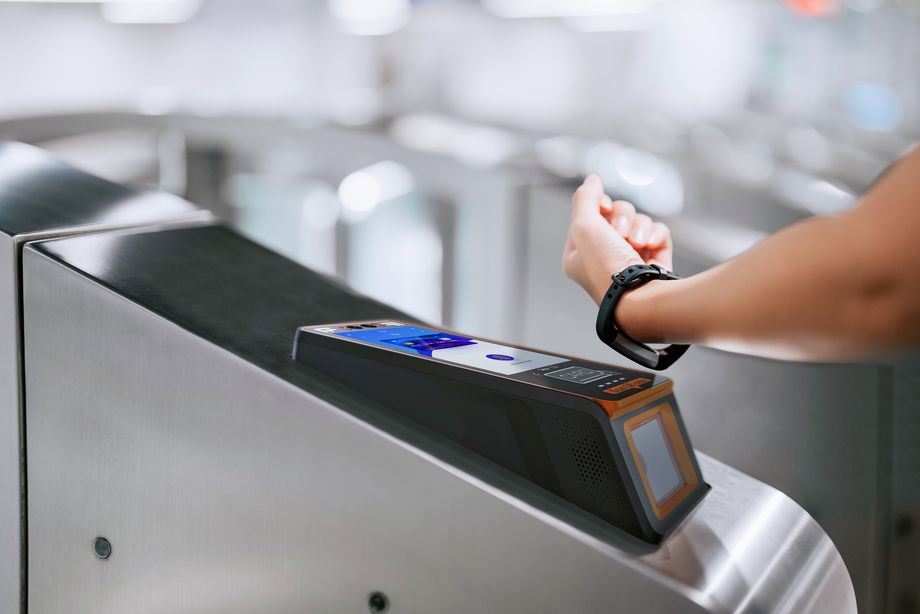
Contactless EMV Ticketing system
B. Contactless EMV (cEMV) Ticketing
Contactless EMV leverages the global payment card infrastructure to enable “open-loop” transit payments. Passengers simply tap their contactless credit/debit card or digital wallet (Apple Pay, Google Pay) directly on transit readers — no transit-specific card needed.
The EMV transit model (per EMVCo specifications):
|
Model |
Nom |
Description |
|
Model 1 |
Full Online Authorization |
Every tap authorized in real-time with the bank. Highest security, but requires constant connectivity and higher latency |
|
Model 2 |
Deferred Authorization |
Taps are aggregated offline; authorization batched later. Lower latency, requires risk management |
|
Model 3 |
Pre-Auth / Aggregated |
A pre-authorized amount is held; taps deducted against it. Common for transit due to speed requirements |
Advantages of cEMV:
- No card issuance costs: Leverages existing bank cards — no need to manufacture and distribute transit cards
- Tourist-friendly: Visitors already have their payment method; no need to understand local ticketing
- Bank-grade security: EMV cryptography and tokenization protect against fraud
- Interoperability: One card works across cities and countries with EMV readers
Challenges:
- Transaction fees: Payment networks charge per-transaction fees, impacting low-value transit fares
- Risk of card decline: Insufficient funds or expired cards create friction at gates
- Bank dependency: System uptime tied to payment network availability
- Privacy considerations: Banking data visibility vs. transit data anonymization
Successful deployments:
- Transport for London: Over 70% of pay-as-you-go journeys now use contactless bank cards; saved millions in card issuance costs
- New York MTA OMNY: Rolling out cEMV across subway and bus; projected to replace MetroCard by 2025
- Sydney Opal: Supports cEMV alongside closed-loop Opal cards
- Moscow Troika: Integrated cEMV with local payment systems
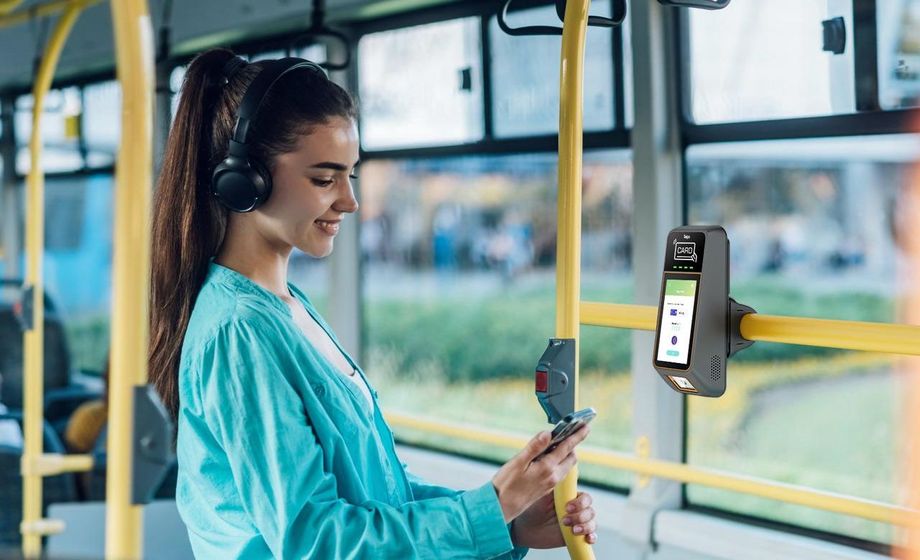
C. Bus, Train & Metro Fare Collection Services
Different transit modes demand different fare collection Matériel AFC architectures:
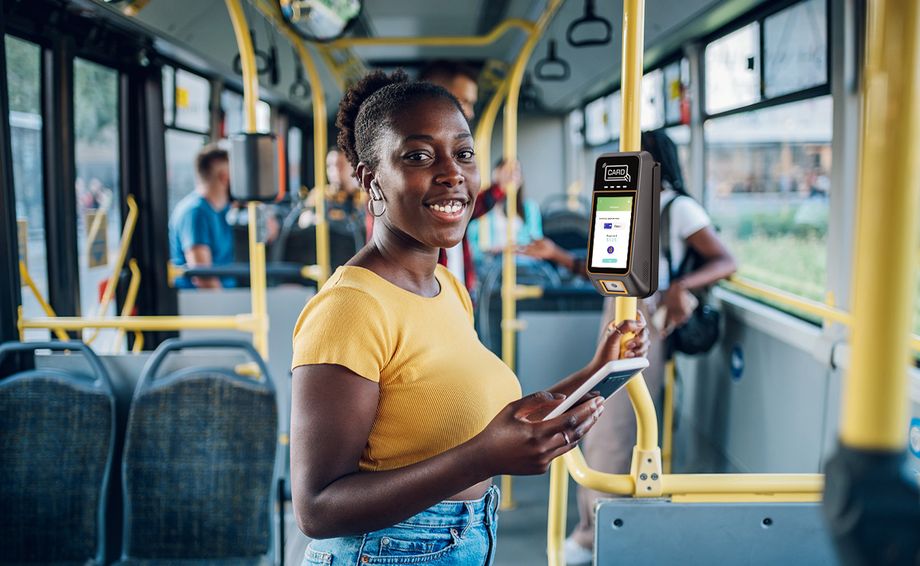
Bus Fare Collection Solution
- Onboard validators: At each door for tap-in (and sometimes tap-out)
- Cashless imperative: Exact fare, driver distraction, and revenue leakage drive digital adoption
- Key metrics: Boarding time per passenger (target: <2 seconds), GPS synchronization for distance-based fares
- Unique challenges: Vehicle vibration, temperature extremes, driver protection, power supply (9-40V DC)
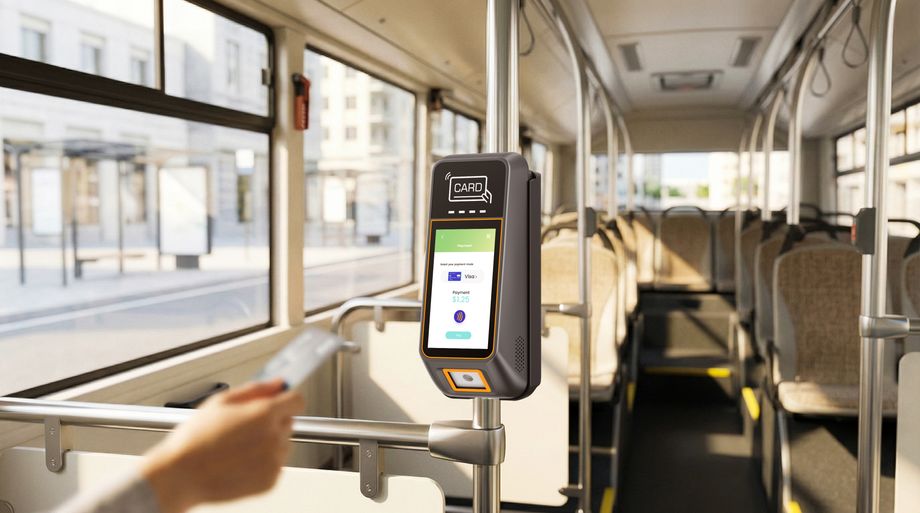
- Telpo solution: Telpo T20/T10 onboard validateurs with IP65/IK08, GPS tracking, 4G/Wi-Fi, and external printer support
Metro/Subway Fare Collection
- Station-based gates with entry and exit validation
- Distance-based or time-based fare models require both tap-in and tap-out
- Peak-hour throughput demands sub-second transaction processing
- Integration requirements: Must interface with existing back-office from vendors like Cubic, Thales, or Scheidt & Bachmann
- Telpo solution: Telpo T20 pole-mounted validator designed for turnstile integration with Wiegand/RS485 output
Train/Commuter Rail Fare Collection
- Multi-class service(first class, standard, regional) complicates validation
- Proof-of-payment models use handheld inspectors rather than gates
- Onboard validation for ungated stations and regional services
- Interoperability across regional operators (e.g., Deutsche Bahn networks)
- Telpo solution: P9 PDA handheld validators for ticket inspection; T20 for station gates
Multimodal Integration
Modern fare collection aims for seamless multimodal travel — one tap across bus, metro, train, and even bike-share
- Interoperable standards: ITSO (UK), Calypso (Europe), APTA (North America)
- Mobility-as-a-Service (MaaS): Fare collection as part of integrated mobility platforms
Advantages and Disadvantages of Fare Collection Equipment
Advantages of the Automated Fare Collection machine
|
Advantage |
Impact |
Data Source |
|
Revenue protection |
Reduces fare evasion by 30-50% |
TTC Toronto reported CAD $70M annual losses from fare evasion pre- |
|
Operational efficiency |
Eliminates cash counting, reduces staff costs |
London TfL saved £120M annually by moving to contactless |
|
Passenger convenience |
40-60% faster boarding vs. cash |
MTA New York: OMNY processes taps in <0.3 seconds |
|
Data-driven insights |
Real-time ridership analytics |
Transit agencies report 15-25% better demand forecasting |
|
Reduced cash handling |
Lower security risk and armored transport costs |
Sydney Trains eliminated 99% of cash transactions |
|
Flexible fare policy |
Dynamic pricing, off-peak discounts, fare capping |
TfL contactless users saved £200M in first 3 years via fare capping |
|
Environmental benefit |
Paper ticket reduction |
Annual savings of 200+ tons of paper in major cities |
Disadvantages of the Fare Collection machine
|
Disadvantage |
Risk Level |
Mitigation Strategy |
|
High capital cost |
High |
Phased rollout; validator-as-a-service models; Telpo’s competitive hardware pricing |
|
Technology obsolescence |
Medium |
Open-platform hardware (Android/Linux); OTA updates; conception modulaire |
|
Cybersecurity threats |
High |
EMV-level encryption, PCI DSS compliance, network segmentation, regular security patches |
|
Digital exclusion |
Medium |
Retain cash options; provide unbanked alternatives; assistive interfaces |
|
Integration complexity |
High |
Telpo SDK supports multiple protocols; professional engineering support |
|
Transaction fees (cEMV) |
Medium |
Negotiate transit interchange rates; Model 2/3 deferred authorization |
|
Power dependency |
Medium |
Battery backup in validators; offline transaction storage; redundant connectivity |
Global Fare Collection Equipment Suppliers
The automated fare collection market features established global players alongside emerging specialists. Understanding the competitive landscape helps transit operators evaluate partnership options.
Market Overview
- 2022 Market Size:USD 11.6 billion
- 2032 Projected Size:USD 39.8 billion
- CAGR:3% (2023–2032)
- Fastest-growing region:Asia-Pacific (China, India, Southeast Asia)
- Dominant region:North America (early cEMV adoption, infrastructure investment)
Tier 1: Full-System Integrators
These main vendors provide end-to-end solutions, including hardware, software, and back-office systems:
|
Supplier |
Headquarters |
Specialization |
|
Cubic Transportation Systems |
USA |
NextCity platform, Umo mobility suite, comprehensive |
|
Thales Group |
France |
TransCity portfolio, contactless expertise, rail focus |
|
Conduent |
USA |
Offers a highly modular, cloud-based SaaS platform that brings enterprise-level account-based ticketing to agencies of any size. |
|
Scheidt & Bachmann |
Germany |
FareGo system, modular architecture, strong in DACH region |
|
Vix Technology |
Australia |
Specializes in complex multi-agency clearinghouses. |
|
Nippon Signal |
Japan |
Railway signaling + integration |
Tier 2: Regional Specialists & Hardware Providers
|
Supplier |
Headquarters |
Focus Area |
|
INIT |
Germany |
European bus and rail, real-time passenger info |
|
Masabi |
UK |
Mobile ticketing SDK, SaaS fare collection |
|
GMV |
Spain |
Latin America, Spain, custom solutions |
|
LECIP |
Japan |
Asian markets, gate and validator hardware |
|
Telpo |
China |
Export Global markets, validator manufacturing |
Tier 3: Component & Technology Providers
- NXP Semiconductors:NFC chipsets, secure elements, MIFARE technology
- Samsung SDS / LG CNS:Korean market, smart card systems
- Siemens AG:European rail automation, infrastructure
- Indra Sistemas:Spanish-speaking markets, IT integration
- Conduent (formerly Xerox):North American transit, fare collection services
Competitive Dynamics
Key trends shaping the supplier landscape:
- Open-loop pressure:cEMV adoption is forcing closed-loop specialists to adapt or partner with payment providers
- Hardware commoditization:Standardized Android/Linux validators are eroding proprietary hardware margins
- SaaS migration:Masabi and others demonstrate that software/cloud can disrupt traditional capex-heavy models
- Regionalization:Chinese and Indian suppliers are expanding globally with cost-competitive offerings
- MaaS integration: is becoming a component of broader mobility platforms rather than a standalone system
Telpo’s Complete Fare Collection Ecosystem
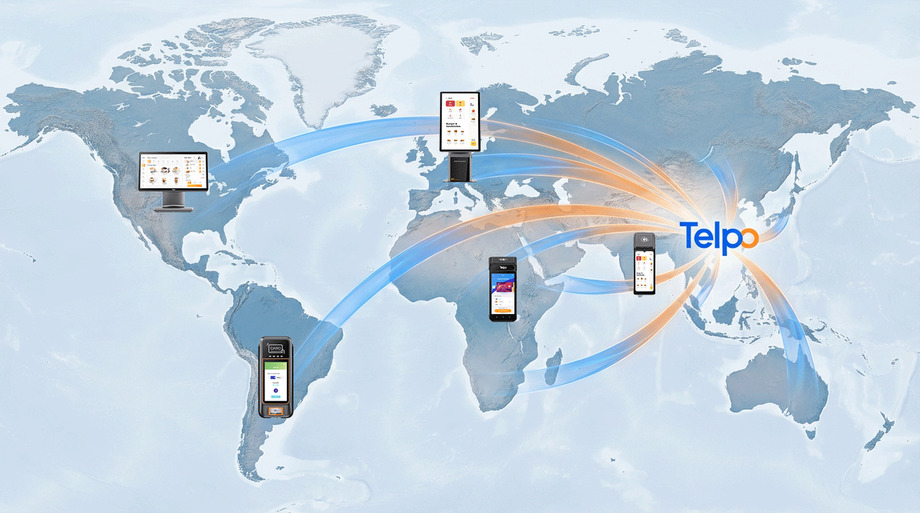
Since 1999, Telpo has evolved from a smart terminal manufacturer into a comprehensive fare collection hardware partner serving large and small business customers across 100+ countries. Unlike full-system integrators, Telpo specializes in the critical hardware layer — providing high-performance validators, open-platform interfaces, and professional integration support that enables system integrators and operators to build custom solutions.
Hardware Product Matrix
Telpo offers purpose-built devices for every fare collection scenario:
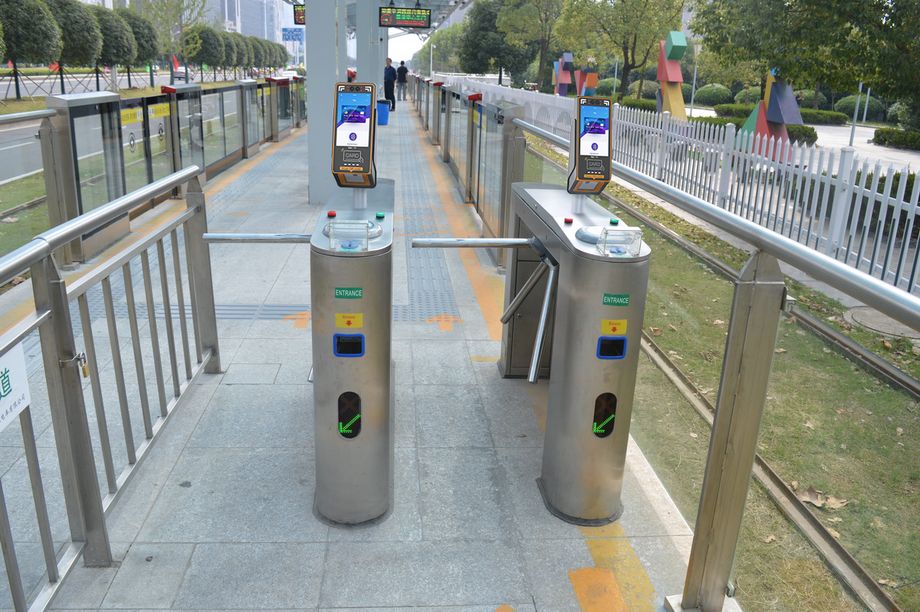
Station & Gate Validators
|
Model |
Form Factor |
Caractéristiques principales |
Meilleur pour |
|
Telpo T20 |
High-end gate validator |
7” HD display, NFC+QR+Barcode+Facial, IP65/IK08, Wiegand/RS485, Android /Linux |
Metro turnstiles, BRT stations, Theme Parks, high-traffic gates |
|
Compact onboard/station validator |
5.5” LCD, QR+NFC, IP54/IK07, GPS, 4G/Wi-Fi |
Bus entry, light rail, secondary stations |

Handheld & Mobile Terminals
|
Model |
Form Factor |
Caractéristiques principales |
Meilleur pour |
|
Point de vente mobile with printer |
58mm thermal printer (80mm/s) barcode/QR generation |
Ticket issuance, cash-to-paper workflows |
|
|
Rugged handheld ticket scanner |
NFC+QR, 4G, barcode scanner, long battery life |
Proof-of-payment inspection, train conductors |
|
|
M8 / M10 |
Tablet-style POS |
GMS-certified, Android, multiple payment methods |
Retail-top-up, customer service |
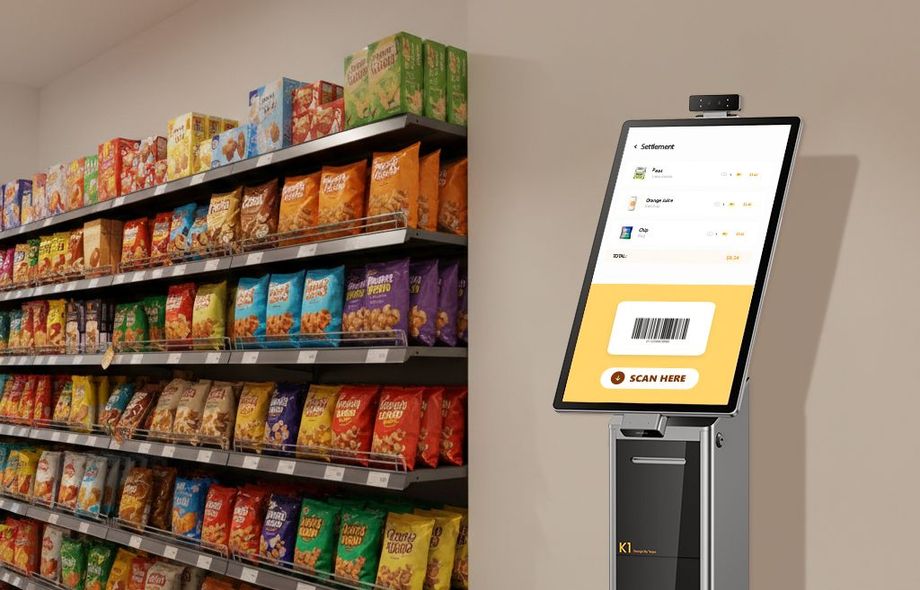
Kiosk & Self-Service
|
Model |
Form Factor |
Caractéristiques principales |
Meilleur pour |
|
Telpo K20/K1 |
Large display, NFC card/mobile wallet acceptance, ticket printing |
Station TVM replacement, retail ticketing |
SDK, OS & MDM Platform
Telpo’s differentiation lies not just in hardware, but in its open platform strategy that reduces integration risk and accelerates time-to-market.
Telpo SDK
- Android SDK:Native Java/Kotlin APIs for NFC reading, QR scanning, printer control, GPIO, display management
- Documentation:Technical Q&A help with 24/7 online
- Demo applications:Source code provided for T20, T10 machine to accelerate development
Key SDK capabilities:
- ISO14443 Type A/B, MIFARE, ISO18092 (FeliCa) NFC protocolsoptional
- EMV Contactless L1 compliance
- Custom Wiegand output formats for gate controller integration
- GPIO control for external indicators, buzzers, gates
- Real-time transaction logging and batch upload
- Remote configuration via Telpo MDM
Telpo OS
- Based on Android(T10, T20) with security patches
- En option Linux configuration for legacy system integration
- Custom boot animations and branding support
Telpo MDM (Mobile Device Management)
- Over-the-air updates: Push firmware, apps, and configurations to entire fleets simultaneously
- Remote diagnostics: Device status, connectivity health, transaction logs
- Geofencing & GPS tracking: Real-time fleet location for bus validators
- Security policies: Remote lock/wipe, app whitelist/blacklist
- Bulk configuration: Deploy settings across thousands of devices
- Kiosk mode for locked-down deployments
Operational impact:
- Eliminates technician visits for routine software updates
- Reduces mean-time-to-repair (MTTR) via remote diagnostics
- Enables dynamic fare rule deployment without hardware intervention
Global Deployment Cases & Data
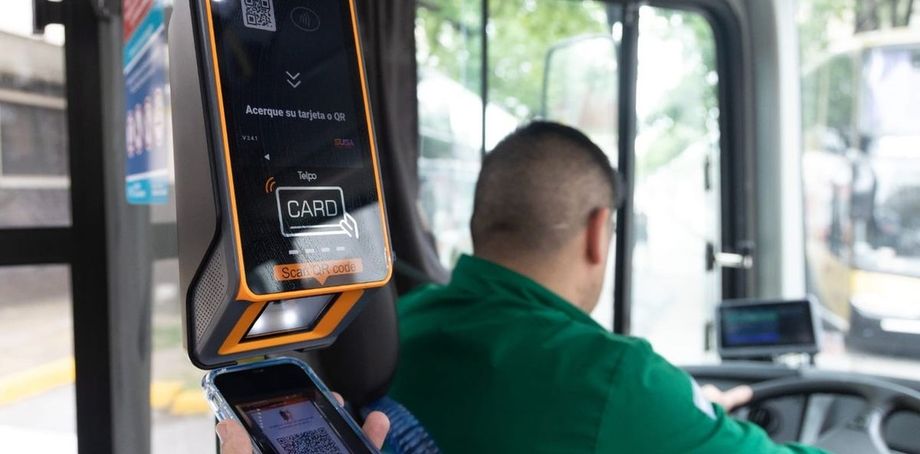
Case 1: Argentina Buenos Aires — Large-Scale Bus
- Application: Modernize Argentina Buenos Aires public transport
- System: Contactless smart card (SUBE) and open-loop payments,
- Outcome: Reduced boarding time; eliminated cash handling on board
- Telpo devices: T20 validators, robust, industrial-grade validators are integrated into buses to enable faster, secure, and flexible fare collection, supporting the city’s transition toward a more advanced transit system.
Case 2: South America Metro-Station System
- Application: Metro station automatic fare collection at entry/exit gates
- Telpo devices: T20 pole-mounted validators integrated with existing turnstiles
- Capabilities: NFC card payments, QR codes, digital wallets, real-time data collection
- Results: Automated fare deduction based on distance; enhanced boarding efficiency; reduced fare evasion; optimized operational management through passenger data analytics
Case 3: Ethiopia — National Bus Ticketing Digitalization
- Challenge: Cash-only system causing long queues, revenue leakage, and operational inefficiency
- Telpo solution: Two-device workflow
- Telpo M1handheld POS for ticket sellers — prints paper tickets with QR codes at 80mm/s
- Telpo T10validators at bus entry points — scans QR and supports NFC
- Benefits:
- Accelerated ticket inspection process
- Fraud reduction via barcode/QR validation
- Contactless NFC option for modern payment preferences
- Enhanced passenger experience with faster boarding
Case 4: Nigeria — Rail & BRT Digital Transformation
- Rail application: Telpo validators deployed at light rail stations for ticket validation
- BRT application: Updated TPS530 with external printer for Lagos BRT off-board fare collection
- Payment methods: NFC cards, QR codes, mobile wallets
- Regional support: Branch office in Nigeria for direct local communication
- Impact: Contributed to Nigeria’s digital payment transformation; reduced cash dependency in public transport
Telpo’s Competitive Positioning
|
La force |
Evidence |
|
over 25 years hardware expertise |
Founded 1999; deep manufacturing and R&D experience |
|
Cost-competitive |
Chinese manufacturing base; Lower hardware cost vs. Tier 1 vendors |
|
Open platform |
Android/Linux; comprehensive SDK; no vendor lock-in |
|
Global footprint |
over 20,000+ customers; 100+ countries; Local support |
|
Rapid customization |
Tailored solutions delivered. OEM/ODM capabilities |
|
After-sales network |
Dedicated service centres; remote engineering support; MDM for fleet management |
|
Multi-modal coverage |
Products for bus, metro, rail, handheld inspection, kiosk — complete ecosystem |
How to Choose the Right Fare Collection Equipment
8-Dimensional Evaluation Framework
|
Dimension |
Poids |
What to Evaluate |
|
1. Throughput capacity |
20% |
Transactions per second; peak-hour handling; tap-to-gate-open latency |
|
2. Media compatibility |
15% |
NFC (Type A/B, MIFARE, FeliCa), QR, barcode, cEMV, mobile wallets |
|
3. Environmental resilience |
15% |
IP rating (dust/water), IK rating (impact), temperature range, Vibrations ESD protection |
|
4. Integration flexibility |
15% |
SDK availability, OS options (Android/Linux), protocol support (Wiegand/RS485), API documentation |
|
5. Connectivity |
10% |
4G/5G, Wi-Fi, Ethernet, offline transaction storage, batch upload |
|
6. Fleet management |
10% |
MDM capabilities, OTA updates, remote diagnostics, configuration management |
|
7. TCO (Total Cost of Ownership) |
10% |
Hardware cost, installation, maintenance, software licensing, training |
|
8. Vendor support |
5% |
Local presence, response time, spare parts availability, engineering resources |
Application-Specific Selection Guide
|
Scenario |
Recommended Telpo Device |
Key Considerations |
|
Metro gate integration |
T20 |
Wiegand output, pole-mount, IP65/IK08, Linux option for legacy systems |
|
Bus onboard validator |
T10 or T20 |
GPS tracking, 9-40V power, vibration resistance, 4G connectivity |
|
Ticket inspection handheld |
Rugged design, long battery, camera for QR, 4G for real-time validation |
|
|
Cash-to-paper workflow |
M1/P9 |
Fast thermal printer, portable, barcode/QR generation |
|
Self-service station kiosk |
K20/ K1 |
Large display, cash/card acceptance, ticket printing |
|
Retail top-up/agent |
M8/M10 |
GMS-certified, Android, multiple payment methods |
Comparison with Telpo T20 and T10 Specifications
Key Specification Comparison
|
Dimension |
Telpo T10 |
Telpo T20 |
|
Product Type |
Compact Bus Card Reader |
High-end Ticket Validator |
|
Affichage |
5.5″ touchscreen, anti-glare |
7″ touchscreen, anti-glare |
|
OS |
Telpo OS (Android 12) |
Telpo OS (Android 12) / Linux (optional) |
|
Closed-Loop Cards |
ISO14443 A/B, Mifare, Cipurse, Calypso, Felica |
ISO14443 A/B, Mifare, Cipurse, Calypso, Felica |
|
Open-Loop / cEMV |
EMV Contactless L1, Paywave, Paypass |
EMV Contactless L1, Paywave, Paypass |
|
QR Code/ Mobile Payments |
✔ QR code + e-wallet |
✔ QR code + e-wallet |
|
Validation des tickets papier |
✔ |
✔ |
|
Barcode Formats |
QR, Aztec, 1D barcodes (hard decoding) |
QR, Aztec, 1D barcodes |
|
Impact Protection |
IK07 |
IK08 |
|
Dust & Water Protection |
IP54 (optional) |
IP65 (standard) |
Conclusion: The T20 is the superior choice for high-traffic, premium installations (metros, major transit hubs) requiring top-tier ruggedness and processing. The T10 is the ideal solution for cost-effective, space-constrained installations (urban buses, mini buses, etc)
Frequently Asked Questions (FAQ)
Q1: What is the difference between closed-loop and open-loop fare collection?
Closed-loop systems use transit-specific cards (Oyster, MetroCard) where value is stored on the card itself. Open-loop systems accept standard payment methods like contactless bank cards and mobile wallets. Open-loop reduces issuance costs and improves tourist accessibility but incurs payment network fees. Many modern systems (TfL, OMNY) operate both in parallel.
Q2: What is cEMV and why is it important for transit?
cEMV (contactless EMV) allows passengers to use their existing bank cards or digital wallets to pay for transit. It eliminates the need for transit agencies to issue and manage proprietary cards, reduces tourist friction, and leverages bank-grade security. The trade-off is per-transaction fees, which agencies negotiate through transit-specific interchange rates.
Q3: How do I integrate Telpo validators with my existing back-office?
Telpo provides two integration pathways: (1) Use the Telpo SDK to build a custom connector between the device and your system’s API or communication protocol; (2) Choose the optional Linux OS configuration for environments requiring integration with older infrastructure or specific middleware. Telpo’s professional engineering team provides remote and on-site support.
Q4: How does Telpo compare to Tier 1 suppliers?
Telpo focuses on the hardware and open-platform layer rather than full back-office systems. This specialization delivers 40-60% lower hardware costs, faster customization cycles, and no vendor lock-in. For operators with existing back-office investments or integrators building custom solutions, Telpo provides the validator hardware and SDK to connect to any backend.
Q5: What maintenance is required for transit validators?
Key maintenance areas include hardware wear (NFC reader surface, display), software updates, and connectivity monitoring. Telpo addresses these through IP65/IK08 ratings (T20) that reduce physical damage, pole-mounted designs that simplify replacement, and Telpo MDM for over-the-air updates that eliminate technician visits for routine software maintenance.
Q6: Can Telpo validators operate offline?
Yes. Telpo validators store transactions locally during connectivity outages and batch-upload when the connection is restored. Offline operation is essential for bus routes with intermittent cellular coverage and metro stations with redundant network requirements.
Q7: Where has Telpo deployed fare collection solutions?
Notable deployments include: Argentina Buenos Aires (1,691 buses, T20 bus validators); South America metro stations (T20 gate validators); Ethiopia national bus ticketing (M1 + T10 workflow); Nigeria light rail and BRT systems (TPS530); and exhibitions at UITP Summit 2025. Telpo maintains branch offices in Nigeria and service centers in Tanzania for African market support.
Conclusion
Fare collection equipment has evolved from simple mechanical turnstiles into sophisticated, multi-modal payment ecosystems. The global market’s 13.3% annual growth reflects the universal imperative to digitize transit payments, reduce revenue leakage, and improve passenger experience.
Key trends shaping the future include:
- Account-Based Ticketing: replacing card-centric systems with passenger-centric backends
- cEMV open-loop payments, reducing card issuance burden while introducing new cost structures
- Multimodal integration, enabling seamless travel across bus, metro, train, and emerging mobility modes
- Hardware commoditization, driven by Android/Linux open platforms that reduce vendor lock-in
- SaaS and cloud migration, shifting from capex-heavy installations to subscription-based models
For transit operators and system integrators evaluating hardware partners, the landscape offers two strategic paths: full-system integration with Tier 1 vendors (Cubic, Thales, Scheidt & Bachmann) or hardware-focused partnerships with open-platform specialists like Telpo.
Telpo’s value proposition centers on cost-competitive, customizable hardware, a mature SDK ecosystemet proven global deployments across 100+ countries. With products covering every fare collection scenario — from metro gates (T20) to bus card readers (Telpo T10), handheld ticket scanners (P9 PDA), and ticket issuance (M1) — Telpo enables integrators to build tailored solutions without the overhead of proprietary hardware ecosystems.
Whether launching a new BRT system in Africa, modernizing a metro network in South America, or adding contactless payment to an existing European bus fleet, the fundamental requirement remains the same: reliable, secure, and interoperable fare collection equipment that serves both operator efficiency and passenger convenience.