
Table of Contents
- Quick Insight
- From 1 to 40,000: The Scale of China’s Largest C-Store Chain
- 1. Self-built POS System
- 2. Self-service Checkout
- Why Are Self Service Kiosk Solutions So Important in Convenience Stores?
- What Benefits Do Self Service Kiosks Bring to Stores?
- Scaling Up: From Countertop K10 to Unmanned K8
- Conclusion
- FAQ
From 1 to 40,000: The Scale of China’s Largest C-Store Chain
In 2023, China’s top convenience store operator overtook Easy Joy to become the leader of the country’s convenience industry by virtue of its over 32,000 stores. By mid-2025, that number climbed past 40,000 stores, according to the China Chain Store & Franchise Association (CCFA). The chain has been praised as China’s Convenience Store King.
Founded in 1997, it has been 29 years since the first store opened. Up to now, the network covers more than 240 cities in 22 provinces. It serves more than 200 million customers every month.
From 1 to 40,000, innovation plays an important role in this c-store chain’s success.
1. Self-built POS System
As early as 2000, the company embarked on the road of computerisation and built its own POS system. The smart cash registers connect the headquarters and stores, which greatly improves operational efficiency. Besides, the self-built POS system provides great convenience for franchise owners with simple operation and low operation difficulty.
2. Self-service Checkout
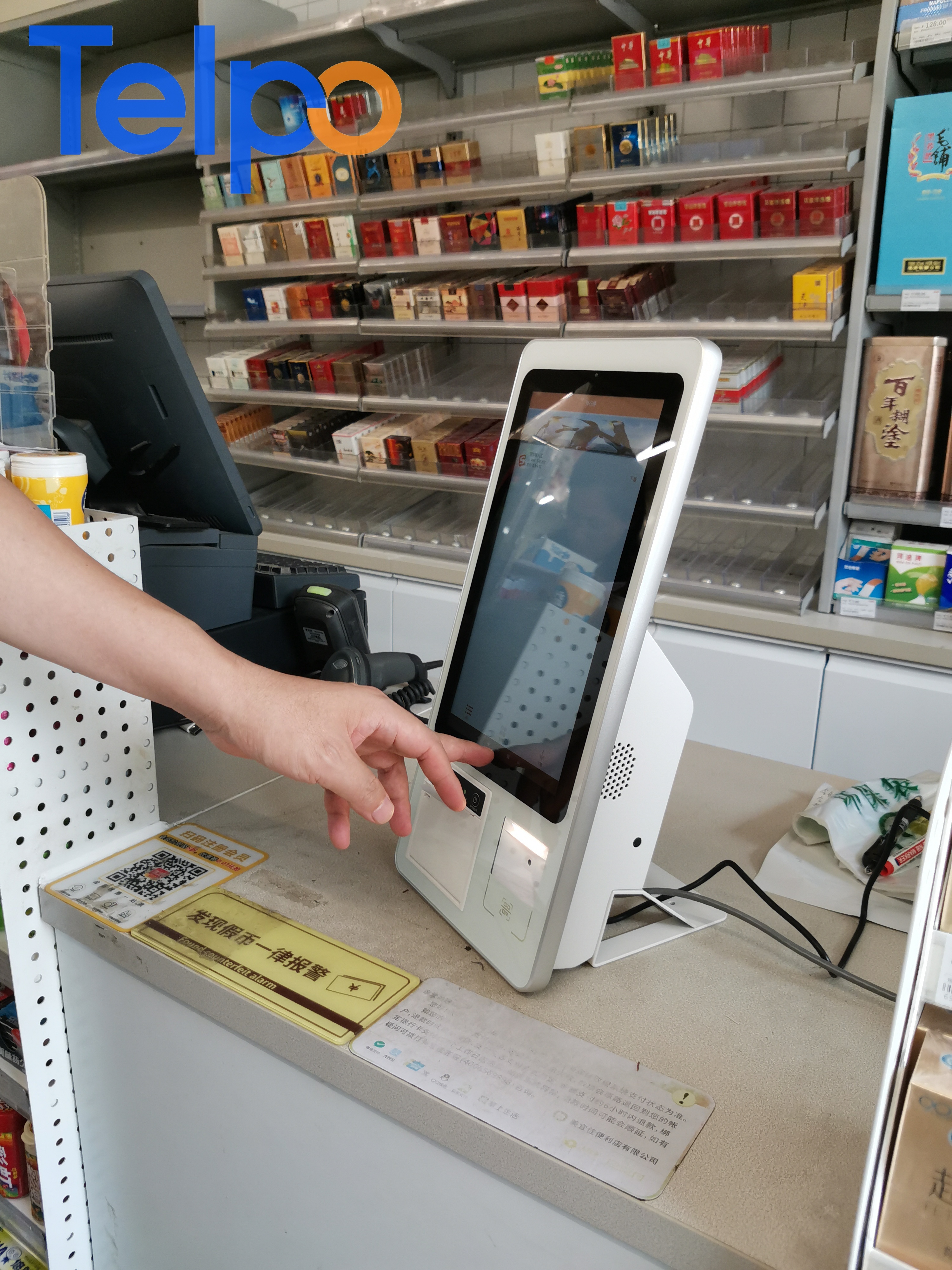
In addition to providing convenience for its franchises, the chain introduced self-service kiosk solutions to offer self-service checkout and self-ordering experiences to customers. The stores deploy Telpo’s compact desktop self-service kiosks—the Telpo K10—that support multiple payment methods. The easy-to-use instore kiosk becomes a great helper for store operators.
The K10 is a lightweight touch kiosk manufacturer grade device built for tight counters. It comes with a built-in scanner that handles both commodity scanning and QR-code payments. The built-in 58mm thermal printer supports fast paper output, and customers can easily check their order lists. For chains that need kiosk wholesale suppliers capable of rapid customization, the K10 platform allows OEM branding and software integration without changing the hardware footprint.
Why Are Self Service Kiosk Solutions So Important in Convenience Stores?
1. Customers’ high demand for convenience
What most customers look for in a convenience store is convenience. If customers have to spend much time on ordering and checkout, the purpose of going to a convenience store will be defeated. Quick service and short waiting times are of great importance for office workers who are often in a hurry. A self service kiosk for store counters directly answers this demand.
2. High labour costs
The convenience store staff are always busy. They have multiple tasks to deal with every day, such as handling transactions, preparing and serving food, restocking shelves, checking inventory levels, etc. As labour costs keep rising—a single cashier in China’s first-tier cities costs operators roughly $800–1,200 per month including benefits—it is expensive for operators to employ more staff. Compared to increasing labor costs, it is more cost-effective to invest in self service kiosk solutions in convenience stores.
3. High rental cost
Most convenience stores are located in business zones, where the rent is very high. Therefore, convenience stores usually take up a small space, which cannot provide ample space to accommodate many employees and customers waiting in line. The small store space puts forward a higher demand for higher serving and checkout efficiency offered by convenience stores. An in-store ordering kiosk with a compact footprint solves this constraint without requiring floor space.
What Benefits Do Self Service Kiosks Bring to Stores?
1. Convenience
Convenience is the core value of convenience stores, and self service kiosks highlight this value. Customers could freely choose to check out by self-service. They do not have to wait long and can check out for their goods in a short time. Customers could get what they want with a short stay at the store. The instore kiosk makes 24/7 operation of convenience stores feasible. Even at midnight, customers could make their purchases successfully on the desktop kiosks placed at the counter by self-service scanning the commodity codes and paying.
2. High service speed
The retail self-ordering kiosk shares a part of the work of convenience store staff so that staff could be dedicated to improving service quality, such as providing friendly assistance for customers and preparing food items. As staff could focus more on food preparation, the service speeds up and customers are able to enjoy a faster experience, which enhances their satisfaction. With a built-in scanner and 58mm thermal printer, the K10 handles both commodity scanning and QR-code payment in one flow, cutting single-transaction time significantly.
3. High order accuracy
The self-service is fully controlled by customers and they could check their orders directly. On the touchscreen of the self service kiosk for store use, they could correct the wrong orders by themselves, which saves more time. Besides, the effects of kiosks are highlighted especially in the food ordering process. After customers customize their orders, the orders can be directly transferred to the back kitchen, which eliminates the errors caused by communications.
4. Satisfactory customer experience
Self-service gives more autonomy to customers. On the kiosk display, the bargains and promotions are clearly displayed, and customers could freely make combinations according to their needs. What is more, it is easier for store operators to facilitate upselling in a way that customers do not resent. The self-service technology delivers a more convenient and comfortable experience to customers that elevates customer satisfaction and loyalty.
5. Differentiation
Modern technology not only provides convenience for customers and staff but also elevates the enterprise’s image by shaping the innovation image. The advanced, modern and intuitive self-service technology makes your convenience stores different from others and creates a more memorable experience for customers.
Scaling Up: From Countertop K10 to Unmanned K8
While the Telpo K10 excels as a compact desktop self-service kiosk for store counters, the chain’s newer store formats demonstrate the next step in automation. For operators planning unattended kiosk night-shift operation or larger self-service zones, Telpo’s K8 series offers a 21.5-inch touchscreen, 3D structured-light camera for face payment, and NFC support—backed by cloud-based sales assistance.
The K10 remains the entry point for space-constrained stores; the Telpo K8 serves as the upgrade path for full unmanned deployment. Both platforms come from the same touch kiosk manufacturer pipeline, ensuring consistent software integration and spare-part availability.
Conclusion
Embracing advanced technology and introducing self-service is one of the success recipes of China’s largest convenience store chain. Of course, selecting a reliable kiosk wholesale suppliers partner is essential, too. Telpo is a smart terminal and touch kiosk manufacturer with 24-year manufacturing and customization experience.
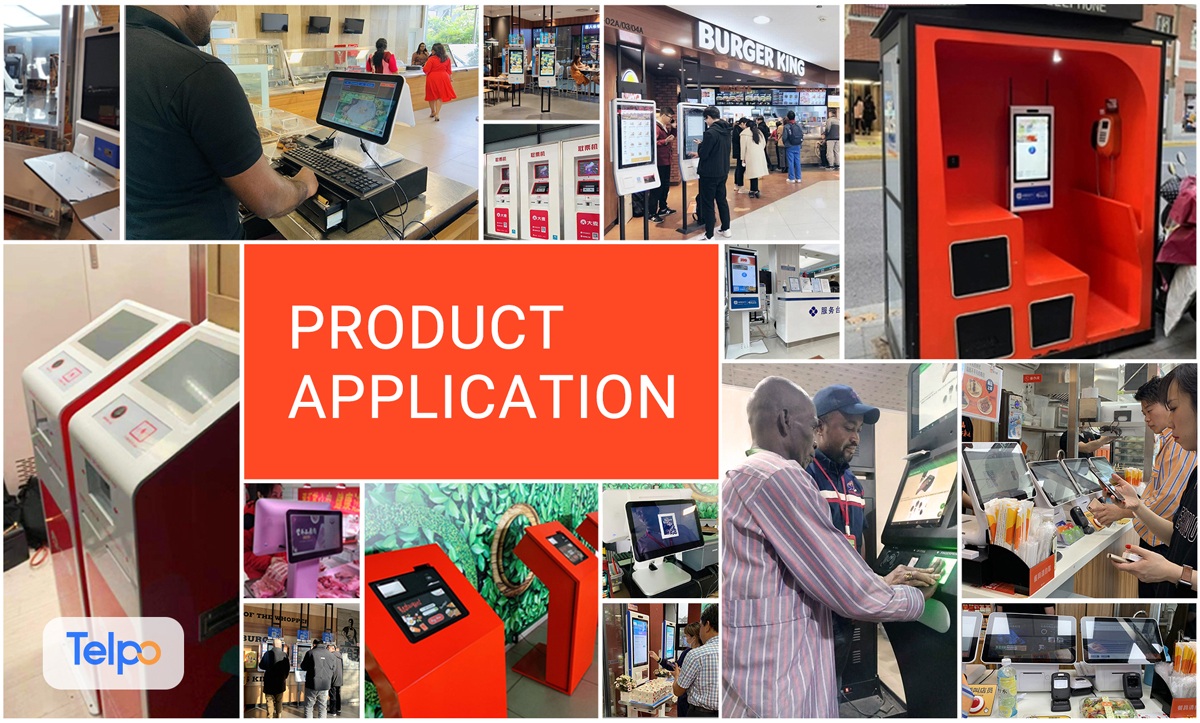
What is worth mentioning is that Telpo’s lightweight desktop kiosk, Telpo K10, has been widely applied in convenience stores, fast food restaurants, and many other scenarios. With a built-in scanner, the K10 supports both commodity scanning and QR code payments. The built-in 58mm thermal printer supports fast paper output and customers can easily check their order lists. For operators ready to move beyond countertop self-service toward fully unmanned stores, Telpo also provides the K8 series as a scalable upgrade.
Welcome to contact us for more details. We have confidence that Telpo will not let you down.
Looking for self-service kiosk solutions for your retail chain?
Contact Telpo to discuss K10 desktop units or K8 unattended kiosk deployments tailored to your store format.
FAQ
What is a self-service kiosk for store operations?
A self-service kiosk for store operations is a compact, interactive terminal that lets customers scan items, place orders, and complete payments without cashier assistance. In convenience stores, desktop models like the Telpo K10 sit directly on checkout counters, saving floor space while handling both commodity scanning and QR-code payment in one flow.
How do retail self ordering kiosks improve convenience store efficiency?
Retail self-ordering kiosks improve efficiency by splitting the workload: one attendant can monitor 4–6 units simultaneously, freeing staff to prepare food and restock shelves. Orders transfer directly to the back kitchen or POS system, cutting communication errors and reducing peak-hour queue times by up to 36%.
What self-service kiosk solutions work best for small-format stores?
For small-format stores with limited counter space, lightweight desktop kiosks are the optimal self service kiosk solutions. The Telpo K10, for example, requires no store renovation, supports multiple payment methods, and includes a built-in 58mm thermal printer—delivering full checkout capability within a footprint smaller than a standard monitor.
Can unattended kiosks operate 24/7 without on-site staff?
Yes. Unattended kiosks equipped with cloud-based sales support, face-payment cameras, and remote monitoring can run 24/7. China’s largest convenience chain uses this model in its newer store formats: customers scan, pay, and go even at midnight, while headquarters monitors transactions and device status in real time.
What should retailers look for in kiosk wholesale suppliers?
Retailers should evaluate kiosk wholesale suppliers on four criteria: manufacturing experience (look for 20+ years in hardware), customization capability (OEM/ODM support for branding and software integration), certification portfolio (CE, FCC, EMV, PCI), and post-sale logistics (global warehousing, local technical support, and spare-part availability).
How does an in store ordering kiosk reduce labor costs?
An in store ordering kiosk reduces labor costs by automating the transaction loop. In China’s first-tier cities, a single cashier costs operators roughly $800–1,200 per month including benefits. A desktop kiosk handles scanning, payment, and receipt printing autonomously, allowing one employee to oversee multiple checkout points during peak hours.
What is the difference between an instore kiosk and a traditional POS terminal?
An instore kiosk is customer-facing: shoppers interact directly with the touchscreen to scan items, apply promotions, and pay. A traditional POS terminal is staff-facing: the cashier operates the device while the customer waits. Kiosks shift labor from transaction processing to higher-value tasks like food prep and customer assistance.
Why choose a touch kiosk manufacturer with deep customization experience?
A touch kiosk manufacturer with deep customization experience can adapt hardware interfaces, payment modules, and enclosure designs to match specific retail environments. Telpo, for instance, provides OEM/ODM services that let chains brand the device UI, integrate loyalty programs, and select scanner or printer configurations based on store format.