
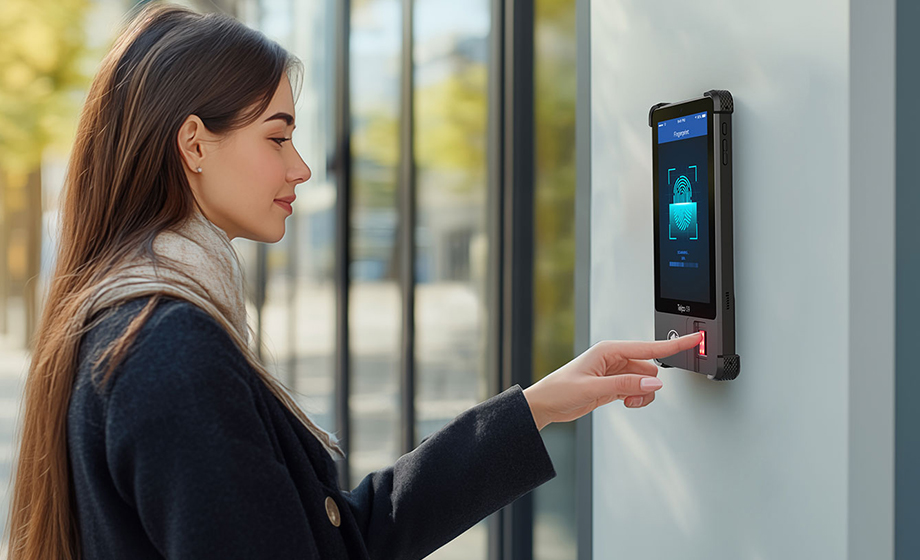
A fingerprint scan seems straightforward — until a worker’s hands are wet, scarred, or calloused, and the system refuses to recognize them. For organizations that rely on a biometric based attendance system to manage workforce access and time tracking, single-modality hardware is increasingly showing its limits. The industry has noticed. The shift toward multimodal biometric terminals combining fingerprint verification, NFC card reading, and on-site identity capture is well underway, and the data behind it is hard to ignore.
Table of Contents
The Market Signal: Biometric Attendance Is Growing Fast
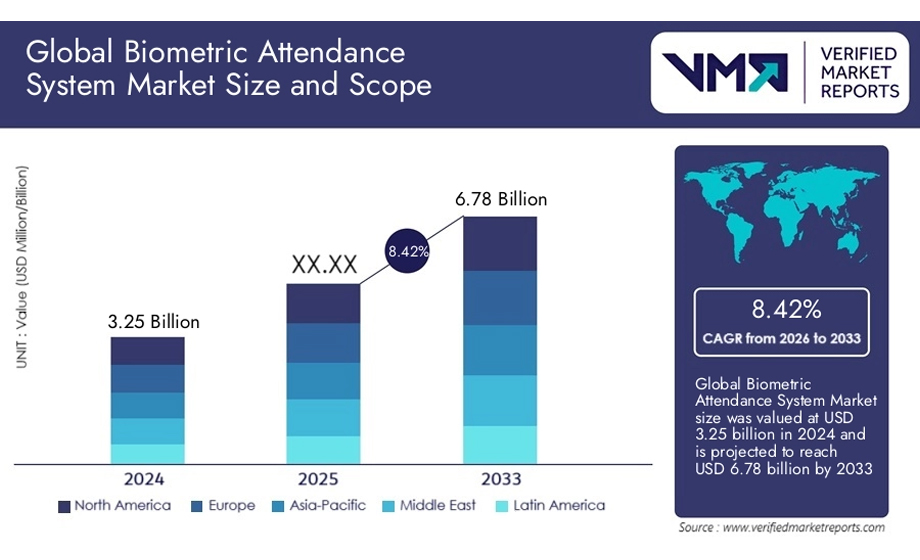
The global biometric attendance system market is on a sustained growth trajectory, reflecting broad organizational recognition that manual and card-based attendance methods are no longer sufficient for modern workforce management.
The Biometric Attendance System Market was appraised at USD 5.3 billion in 2024 and is forecast to grow to USD 12.8 billion by 2033, expanding at a CAGR of 10.5% over the period from 2026 to 2033 (Reported by Market Research Intellect) . This growth is not concentrated in a single sector. Adoption spans healthcare, education, retail, and manufacturing — industries where accurate time tracking, fraud prevention, and workforce accountability are operational priorities. Verified Market Reports
The global shift toward contactless biometric technologies has accelerated significantly, driven by the need to minimize surface contact in high-traffic environments including corporate offices, hospitals, and government buildings. Contactless modalities such as facial recognition, iris scanning, and vein pattern recognition are experiencing accelerated growth alongside fingerprint recognition. 24marketreports
For organizations evaluating their next-generation attendance infrastructure, these numbers reflect a clear directional signal: biometric is the standard, and multimodal capability is where investment is heading.
The Problem With Single-Modality Systems
Single-modality biometric systems introduce operational fragility that becomes more visible as deployment scale and environmental complexity increase.
Fingerprint recognition is accurate under controlled conditions, but performance degrades when users have worn, wet, or damaged skin — a common reality in manufacturing, construction, and healthcare environments. The operational consequence is a frustrating cycle: failed recognitions slow entry throughput, frustrated employees bypass the system, and administrators spend time on manual overrides.
For a worker attendance machine deployed at scale, even a modest failure rate creates measurable productivity loss and compliance risk. A wireless fingerprint attendance system can serve well in stable, controlled environments. But organizations with diverse workforces, multiple deployment sites, or varying environmental conditions need hardware that does not depend on any single biometric modality performing perfectly.
What Is a Multimodal Biometric Based Attendance System?
A multimodal biometric based attendance system combines two or more authentication methods in a single device, allowing the system to fall back to an alternative modality when primary recognition fails.
The practical advantage is straightforward: if a worker’s fingerprint cannot be read due to skin condition, an NFC card provides reliable fallback authentication. The result is a time access biometric machine that maintains high throughput and low failure rates regardless of environmental conditions or individual user characteristics.
The market is witnessing a clear shift toward multi-biometric systems offering higher accuracy and security, minimizing the risk of spoofing. The integration of biometric systems with other security solutions, such as access control and video surveillance, is gaining traction, leading to more holistic security platforms. Data Insights Market
For organizations managing access across multiple sites — offices, factories, government facilities, field locations — multimodal hardware also simplifies infrastructure. A single device architecture handles authentication scenarios that would otherwise require separate specialized terminals at each location.
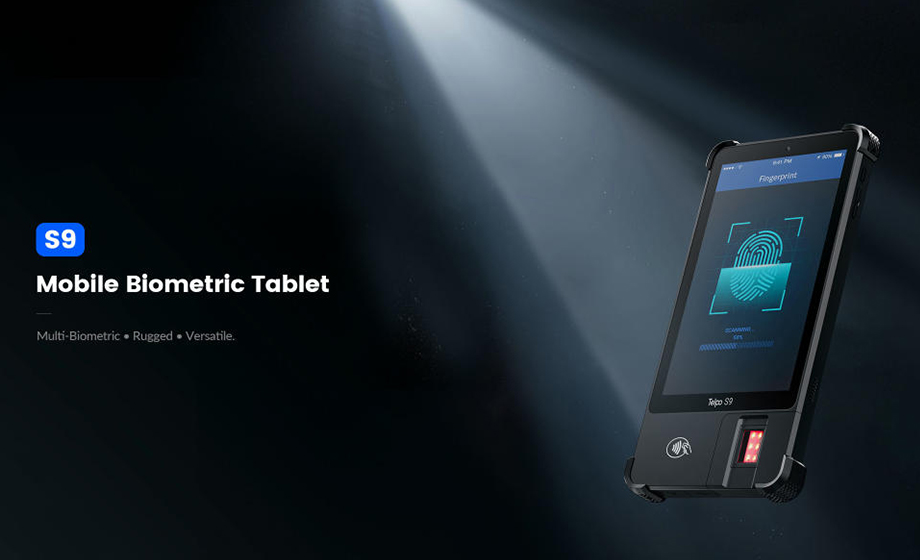
The Telpo S9 is a mobile biometric tablet that integrates fingerprint recognition, NFC card reading, and front and rear cameras for portrait capture and on-site photo verification — purpose-built for organizations that need flexible, high-accuracy authentication across diverse environments.
Flagship Performance for Continuous Operation
The S9 runs on an octa-core processor with large-capacity memory, designed for sustained high-load operation without performance degradation. For deployments where the device is in continuous use across shifts — manufacturing facilities, government enrollment stations, field identity verification — consistent processing speed directly impacts throughput and user experience.
8-Inch Display Designed for Operator and User Comfort
The S9’s 8-inch HD display at 300-nit brightness and 75% screen-to-body ratio provides a comfortable viewing experience for operators conducting enrollment, verification, or data review tasks. The G+G tempered glass construction ensures durability and scratch resistance in environments where the device sees continuous handling — making it a reliable fingerprint scanner tablet for demanding field deployments.
Front and Rear Cameras for Identity Capture and Verification
The S9 is equipped with both a front-facing and rear-facing camera, serving distinct functions within the authentication workflow:
-
Front camera — captures portrait images during user enrollment, supporting KYC registration and identity documentation workflows where a standardized face image is required alongside biometric data
-
Rear camera — enables on-site photo comparison, allowing operators to capture and verify an individual’s image against registered records at the point of authentication
This dual-camera setup makes the S9 particularly well suited for government enrollment programs, field KYC verification, and any deployment where a visual record of the individual is required as part of the authentication process.
Secure Multimodal Authentication in One Device
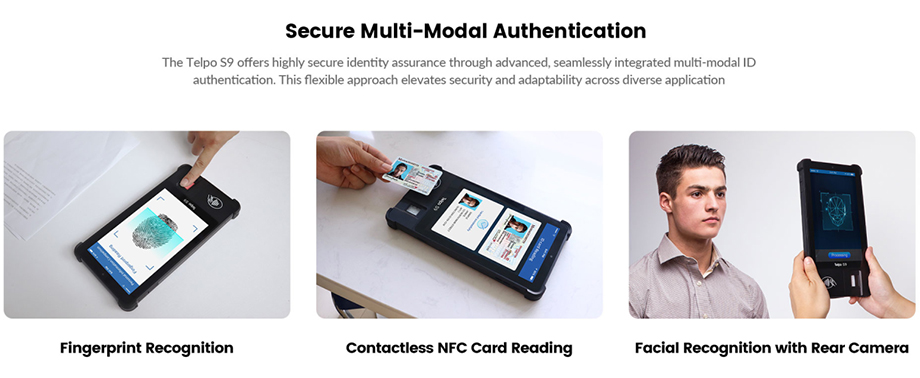
As a fingerprint time attendance machine and multimodal identity platform, the S9 supports three complementary authentication and capture methods on a single unit:
-
Fingerprint recognition — for high-accuracy personal identification in standard conditions
-
Contactless NFC card reading — for fast credential-based authentication and reliable fallback access
-
Front and rear cameras — for portrait capture during enrollment and on-site photo verification at the point of authentication
This combination means the S9 functions equally well as a smart office biometric attendance terminal, a field enrollment device for government KYC programs, or an access control node in a secure facility — without requiring different hardware for each scenario.
Flexible Power and Installation Options
The S9 supports three power input modes to suit different deployment contexts:
-
5V/2A adapter — standard office and indoor fixed installation
-
48V Power over Ethernet (PoE) — network-integrated deployments where a single cable carries both data and power
-
12V access control input — direct integration with existing door control infrastructure
Installation options include wall mounting and turnstile gate integration — covering both standalone attendance deployments and barrier-integrated access control environments.
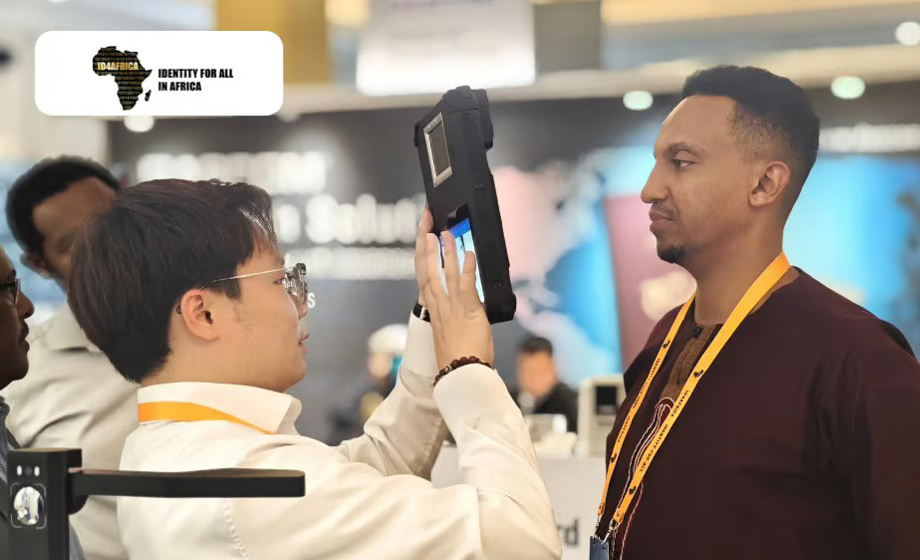
Telpo’s multimodal biometric hardware is backed by sustained international deployment experience across government identity programs, workforce management systems, and national ID infrastructure projects — particularly across Africa and emerging markets where biometric-first identity infrastructure is being built at scale.
Telpo participates annually at id4africa, the continent’s leading forum for digital identity technology, where the company showcases biometric terminals across multiple form factors and authentication modalities. At the Ethiopian ID4Africa 2025 Exhibition, Telpo presented its full range of biometric identity hardware to government agencies, system integrators, and financial institutions evaluating solutions for national programs.
Looking ahead, Telpo will show digital identity solutions at ID4Africa 2026 — continuing its commitment to the African digital identity ecosystem and expanding its engagement with government and enterprise buyers across the continent.
This consistent presence at sector-defining events reflects something more substantive than marketing: it reflects a hardware portfolio that is actually being deployed in government-scale biometric programs where reliability, accuracy, and multi-modality are non-negotiable requirements.
Where Multimodal Biometric Systems Are Being Deployed
Telpo’s biometric identity solution portfolio covers a broad range of deployment scenarios, from enterprise workforce management to government-mandated identity verification programs.
Smart Office and Enterprise Workforce Management
In corporate environments, a rfid card attendance machine combined with fingerprint recognition gives HR and operations teams a flexible system that accommodates the full spectrum of employee authentication preferences. The S9’s NFC reading capability supports integration with existing card-based access infrastructure, reducing the disruption of transitioning to biometric authentication.
For organizations managing remote or distributed teams, a portable biometric machine like the S9 enables field supervisors to conduct on-site attendance verification without fixed terminal infrastructure — a capability that is particularly valuable in construction, utilities, and government field service contexts.
Access Control and Physical Security
Telpo’s Access Control Hardware solution integrates multimodal biometric terminals with barrier control systems, enabling organizations to replace legacy card-only entry with authentication that combines something the user has (NFC card) with something the user is (fingerprint). This layered approach raises the security threshold significantly compared to single-factor card access, without adding friction that slows entry throughput.
Government Programs: KYC, Elections, and National ID
Multimodal biometric hardware is increasingly central to government identity infrastructure across emerging markets. KYC enrollment programs, voter registration systems, and national ID issuance require devices that can capture multiple biometric modalities reliably in field conditions — often without stable power or network connectivity.
The S9’s combination of fingerprint capture, NFC reading, and front and rear cameras for portrait collection makes it directly applicable to these programs, as does its portable form factor that enables enrollment in locations without fixed infrastructure.
The Case for Multimodal Is Now Operational, Not Theoretical
The shift toward multimodal biometric based attendance systems is not driven by technology enthusiasm — it is driven by the operational reality that single-modality systems create measurable failure points at scale. Wet fingers, worn skin, and diverse field conditions are not edge cases; they are daily realities in manufacturing floors, field deployments, and government enrollment sites.
Hardware like the Telpo S9 addresses this directly: a single fingerprint scanner tablet that combines fingerprint recognition, NFC card reading, and dual-camera identity capture with the power flexibility and installation options needed to deploy across fixed and mobile contexts. Backed by Telpo’s sustained presence in global biometric deployment programs — from enterprise workforce management to national ID infrastructure — the S9 represents a hardware investment designed to perform across the full range of scenarios organizations actually encounter.
If your organization is evaluating its next generation of workforce authentication or access control hardware, explore Telpo’s full biometric identity solution portfolio and contact the Telpo team to discuss how multimodal authentication can be configured for your specific deployment requirements.
FAQ
Q1: What is a multimodal biometric based attendance system and how does it differ from a standard fingerprint time attendance machine?
A multimodal biometric based attendance system combines two or more authentication methods — typically fingerprint verification, facial recognition, and NFC card reading — in a single device. Unlike a standard fingerprint time attendance machine that relies on a single biometric modality, a multimodal system provides complementary authentication channels that maintain reliability when primary recognition conditions are not ideal, reducing failed authentications and manual override incidents at scale.
Q2: What are the key advantages of a portable biometric machine like the Telpo S9 for enterprise and government deployments?
A portable biometric machine like the Telpo S9 enables authentication and enrollment in locations without fixed terminal infrastructure — a critical capability for field workforce management, government KYC programs, voter registration, and national ID enrollment. The S9 combines fingerprint recognition, NFC card reading, and front and rear cameras for portrait capture and on-site photo verification in a single mobile device. Its three power input options — adapter, PoE, and access control input — allow flexible deployment across office, field, and barrier-integrated environments.
Q3: How does a smart office biometric attendance system improve on traditional rfid card attendance machines?
A smart office biometric attendance system adds biometric authentication — fingerprint verification — on top of card-based NFC reading, creating a layered authentication approach that is significantly harder to circumvent than card-only systems. Traditional rfid card attendance machines are vulnerable to card sharing and proxy attendance, where one employee clocks in for another. Biometric verification ties attendance records to a specific individual’s physical characteristics rather than a transferable credential, eliminating buddy punching and improving the accuracy of workforce data used for payroll, compliance, and operational planning.