
As the population booms and urbanization deepens, traveling by metro has become a common thing for most people. According to the data, there are 193 metro systems, 731 lines and 13,000 stations all over the world. The number is still growing. How to bring passengers a faster and simpler way to take metros? The operators have deployed metro card readers in ticket gates.

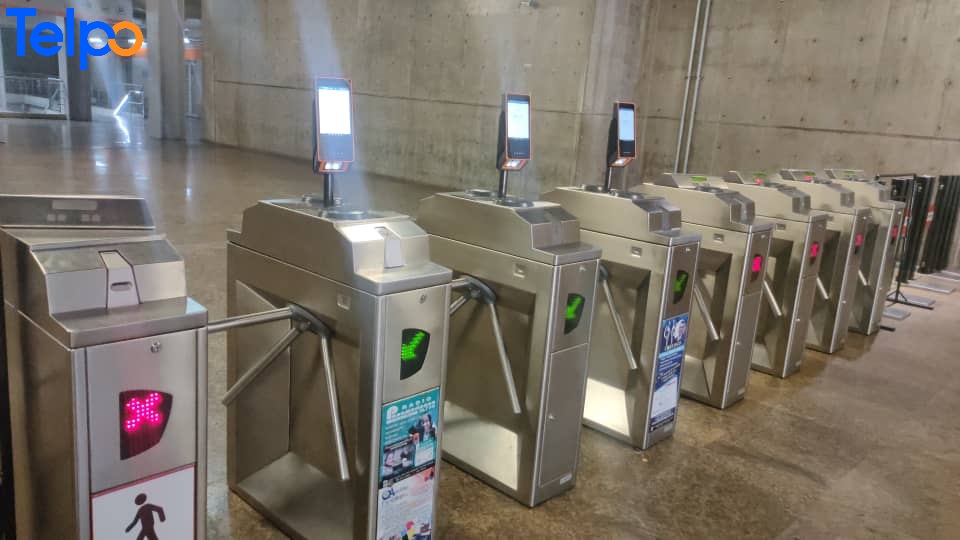
- Transit Card readers in Brazil’s Metro
What is the Metro card reader?
The MetroCard reader is usually connected to the metro ticket gates or turnstiles. The way it works is very simple. Passengers validate their smart cards or tickets using the ticket validators. They can pass the gate if their tickets are verified as valid, or they cannot pass. People usually refer to the ticket validator installed on the gate as the AFC (automatic fare collection) device.
As technology develops and payment diversifies, the metro card reader is advancing. The verification methods supported have become multiple from single. The advanced metro ticketing system supports various fare collection methods, covering NFC, QR codes, and even face recognition.
What are the benefits of deploying metro card readers?
1. More visible and readable information display
The metro card reader equipped with a display is more noticeable. As soon as passengers enter the metro stations, they will see a row of ticket validators for metro and know where to check in and take the metro. This is especially friendly for out-of-town visitors who are taking the subway at this station for the first time. Besides, the screen of the metro card reader or metro pass scanner can clearly show the ticket verification results and passengers can confirm the results in time, which avoids the awkward situation of thinking that the verification is successful but being blocked by the brake lever.
2. More fare collection options(paper ticket&electric ticket)
The paper ticket is no longer the preferred choice of passengers to take public transport. To obtain a paper ticket, passengers need to purchase tickets on-site, which requires more effort and time. By contrast, as digital payments win more popularity, digital tickets are more popular in the field of public transport. At the same time, a ticket validator for metro that can offer more fare collection options is in demand.
The more fare collection options passengers can choose, the more convenience they can enjoy. Now, some advanced metro ticket validators not only can support closed-loop payment methods, such as transit cards, digital tickets, etc., but also support open-loop payments so that passengers can pay for their journey with any bank card at hand.
3. Higher validation efficiency
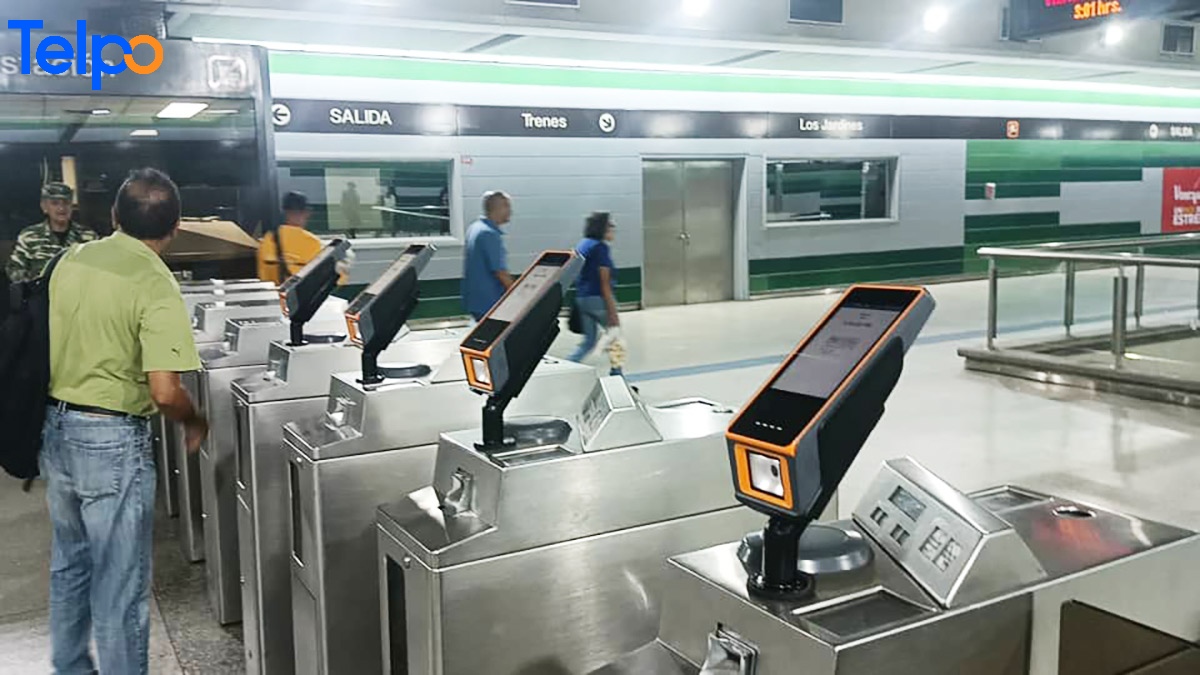
It is a frustrating experience for passengers when they are still waiting in the long line when the train pulls into the platform. Long queues may not matter to tourists wandering aimlessly, but time is life for survival strugglers in a hurry to get to work. The metro card reader can bring a much higher validation efficiency than manual validation. What passengers need to do is tap their cards to the NFC area of the device or display their QR codes to the metro pass scanners. The sensitive ticket validator for metro enables passengers to quickly pass limited in a few seconds, thereby passengers don’t have to wait in long queues.

- Telpo Validator T20 is used for the Latin American metro station
4. Efficient metro management
Metro ticket validators not only elevate the efficiency for customers but also facilitate metro operators to manage. By recording and getting access to accurate high-quality data, the metro operators can analyze the actual traffic situation at different times and adjust the schedules of different lines. By increasing the number of trains during peak hours and reducing the number of trains during less crowded hours, metro operators can provide a higher-quality service for passengers, elevate passenger satisfaction and improve cost-effectiveness.
5. Increased sustainability
Public transport is an environmentally friendly choice and is promoted by more people. As mentioned above, the large deployment of metro card readers can rapidly improve the punctuality and efficiency of trains. If the efficiency of cheap public transport is comparable to that of private cars, more people will choose to travel by metro, resulting in lower energy consumption. It makes public transport a preferred choice for more people and brings increased sustainability to the world.
The above benefits are based on the assumption that the metro ticket validator is reliable enough, and thereby choosing a robust and high-quality validator is of great importance.
Which ticket validator is recommended for metro ticket reading?
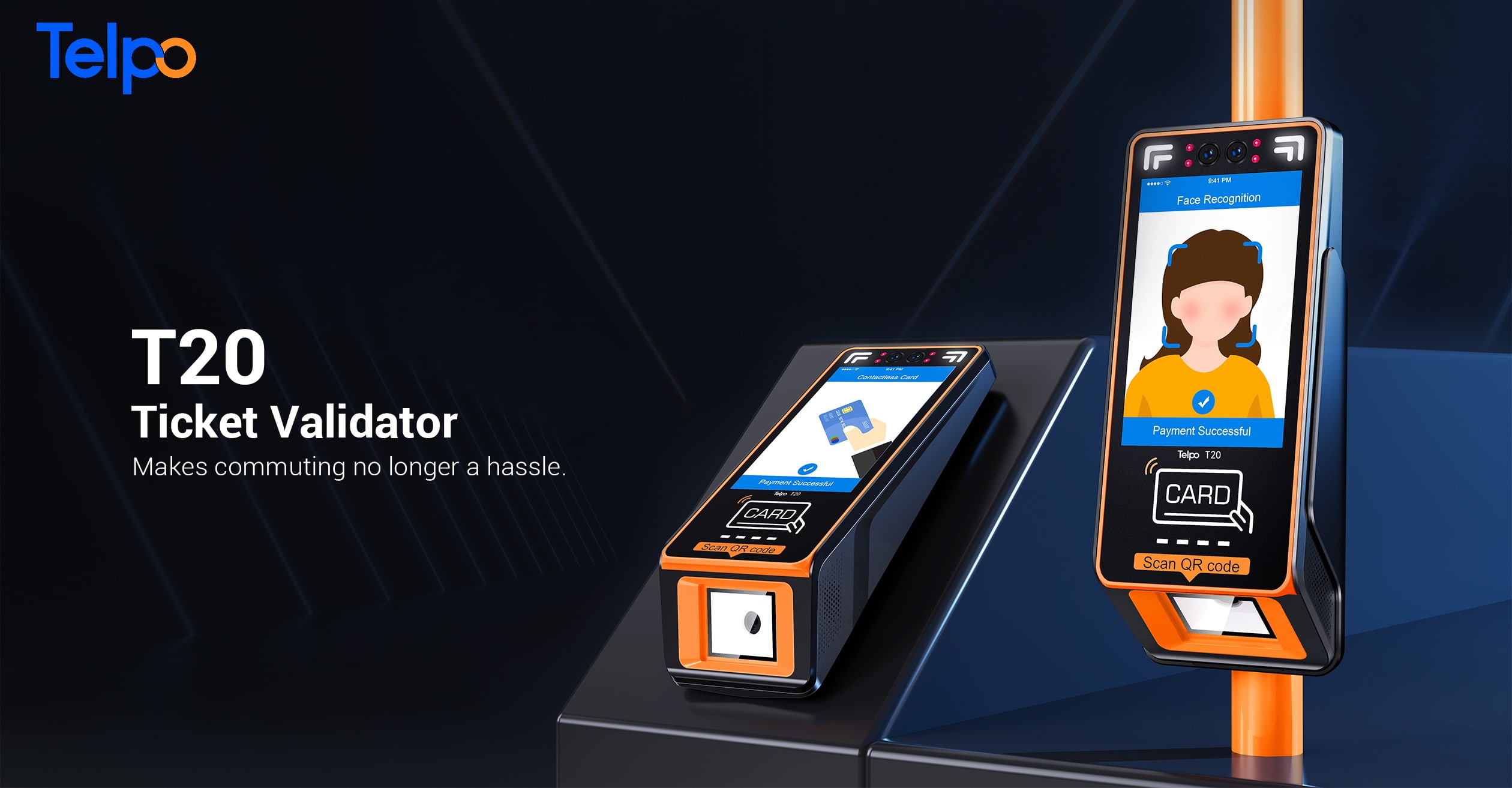
The Telpo T20 is a robust, reliable, and future-proof ticket validator specifically designed for public transport. Here is some main features:
- Rugged and Reliable Design (IP65 and IK08 Certification): Obtaining the IP65 and IK08 certifications, the Telpo T20 has a wide range of applications, both indoors and outdoors.
- High-Speed Processing: Running on the Android 12 OS and Quad-Core processor, this Telpo validator can deliver a quick processing speed and ensures efficiency.
- Dual Payment System Support (Closed-Loop and Open-Loop Payments) : Complying with multiple contactless card readers of ISO14443 Type A & B, Mifare, EMV Contactless L1, Paywave, Paypass, etc., various payment needs of passengers can be satisfied. Accepting both closed-loop payments and open-loop payments, the Telpo T20 can provide more convenience for passengers.
More advantages are waiting for you to discover. Click it for more details.
What features does Telpo T20 have that make it more suitable for metro turnstiles or ticket verification gates?
Telpo T20, as a smart ticketing device, is designed to meet the specific demands of metro gate turnstiles or ticket validation gates with a range of advanced features that enhance its suitability for such applications. Here are some key traits:
- Contactless Technology Support: The Telpo T20 supports a variety of contactless technologies, including NFC and cEMV, which allows for quick and convenient passenger transactions, reducing bottlenecks and enhancing the commuter experience
- High-Speed Transaction Processing: Equipped with fast processors, the Telpo T20 can handle transactions at speed, ensuring that passengers experience minimal delay when passing through the gates, which is particularly important during peak travel times.
- Durable and Vandal-Resistant: Built to withstand heavy use in public transit environments, the Telpo T20 is designed for durability and reliability, making it a long-term solution for high-traffic metro stations.
- Integration Capabilities: The device can integrate seamlessly with existing ticketing systems and back-office software, providing a smooth transition to new technology and simplifying the management of fare collection and passenger data.
- Time Data Sync: Capable of real-time data synchronization with central systems, the Telpo T20 ensures that all transactions are up-to-date and can support advanced fare policies and loyalty programs.
- Advanced Security Features: Incorporating the latest security protocols, the Telpo T20 protects against fraud and ensures the integrity of every transaction.
These features collectively contribute to the Telpo T20’s ability to provide a secure, efficient, and user-friendly ticket validation process, making it an ideal choice for modern metro systems. Welcome to contact us for more details.
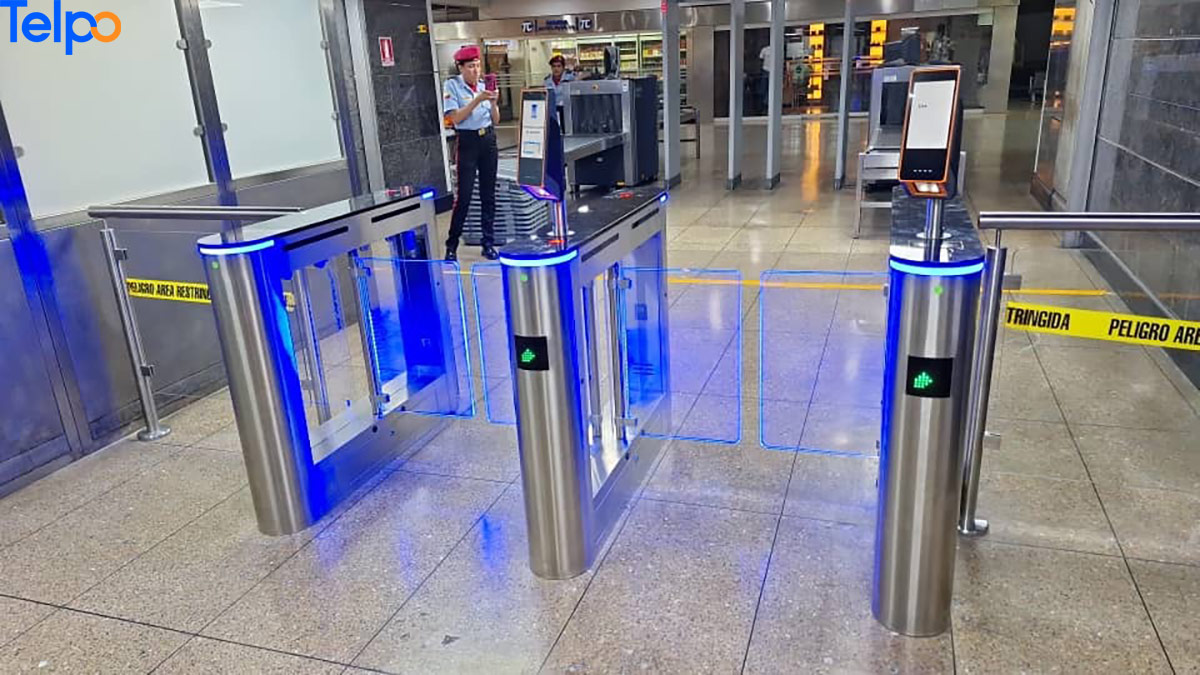
- Telpo Validator T20 is used for Airport ticket access control.
With 26 years of customization and manufacturing experience, Telpo is your reliable cooperative partner to boost your business. In addition to the reliable hardware, Telpo can offer a full suite of platform services covering Telpo MDM, Telpo APP Store, and Telpo OS to enhance device management and user experience. Welcome to contact us for more details.
FAQ
Q5: Can Telpo provide a complete ticketing system for metro stations, and does it include turnstile gates or handheld options?
No, Telpo is a specialist smart hardware provider with deep expertise in the transit and ticketing sectors. While we do not provide the end-user ticketing software or full backend system, we offer the critical high-performance hardware and open-platform development interfaces (SDKs) that allow system integrators to build robust, custom solutions.
Our involvement in a metro project typically covers three key areas:
-
Fixed Validation Hardware: The Telpo T20 is our flagship validator, designed to be integrated into any standard metro turnstile. While customers provide their own gate structures, Telpo provides comprehensive electronic and paper installation guides, ensuring a seamless mechanical and electrical fit. Our professional after-sales engineering team is also available to provide remote or on-site support to streamline the installation process.
-
Mobile & Handheld Terminals: For operations beyond the gate, we provide rugged handheld devices like the Telpo P8 (or similar mobile terminals). These are ideal for ticket inspection, “proof-of-payment” verification inside trains, and queue-busting during peak travel times.
-
Integration Expertise: With years of experience in global transit projects, Telpo provides a mature SDK and technical documentation. This allows your development team to easily connect our hardware to your existing AFC (Automated Fare Collection) backend, ensuring reliable data synchronization and security.