
In today’s urban living, the convenience of public transportation is a crucial factor that people seek. Introducing Bus Pass Scanner, a next-generation smart card ticketing system, addresses the inconvenience of traditional card scanning and improves urban transportation system management.
 (1).jpg "Bus Pass Scanner")
What is a bus pass scanner?
A Bus Pass Scanner is an essential device utilized for scanning and authenticating bus passes. It operates similarly to bus card readers or ticket validators, extracting information from passengers’ passes to validate their legitimacy.
Comprising a scanning module and a processor, the scanner establishes communication with a central database or ticketing system upon scanning a pass, thereby verifying its validity and deducting the appropriate fare. The barcode scanner may also exhibit details such as pass holder information, remaining balance, or other pertinent particulars.
Bus Pass Scanners substantially augment convenience, efficiency, and security within bus transportation systems.
What Are the Benefits of Bus Pass Scanners in Urban Transportation Systems?
1. Breaking through the card-swiping bottleneck, hassle-free paperless travel
Bus Pass Scanner revolutionizes with its compatibility with QR codes and card reading technologies, eliminating physical cards. With intelligent sensing technology, passengers can simply use their electronic bus card on their smartphones, tap to pay, and scan for boarding. This eliminates the hassle of queuing to buy tickets and speeds up passenger boarding. With lightning-fast scanning speed, it truly achieves “smooth travel with a single scan.”
2. Multiple payment methods for convenient flexibility
Bus Pass Scanner supports scan-to-pay, NFC, and even facial recognition technology, catering not only to closed-loop payment methods but also meeting market demands for open-loop EMV payments, Google Pay, and other e-wallets. Users can choose the most convenient payment method based on their preferences, providing a convenient and flexible travel experience. With automatic balance inquiry and real-time feedback on consumption information, a smooth journey is guaranteed.
3. Smart connectivity, data protection, safety, and peace of mind
Bus Pass Scanner maintains real-time connectivity with servers, allowing users to check their balance and transaction records anytime. Robust data encryption technology ensures user privacy and information security, allowing users to enjoy every journey with peace of mind. Powerful backend system management enables data analysis and adjustments to bus routes, thereby enhancing urban public transportation efficiency.
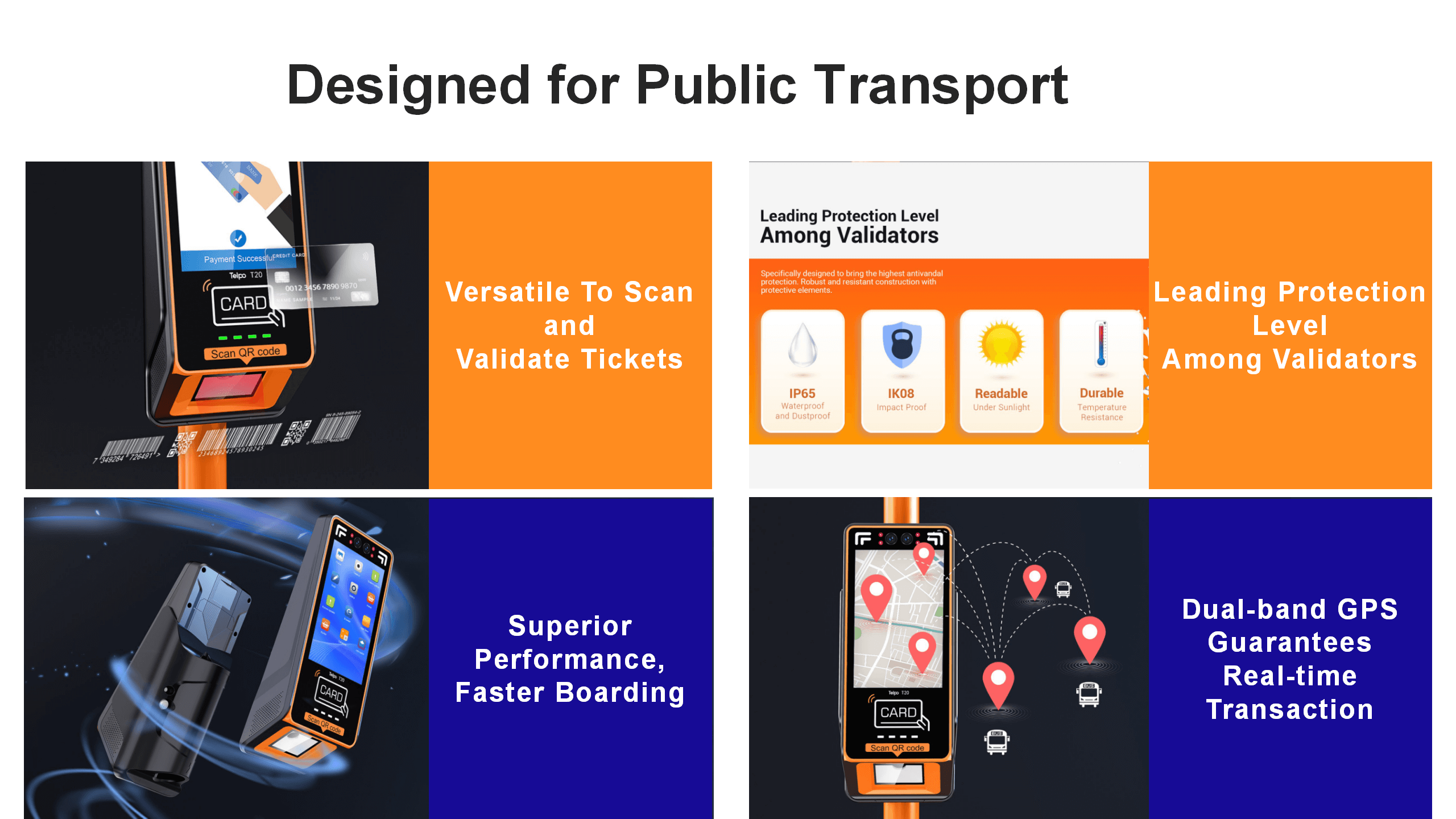
As a leader in smart card machine production, Telpo T20 Bus Pass qr code reader brings a whole new experience to public transportation with its unique innovations and advantages. With fast, secure, and personalized product design, it provides a stable foundation for the new era of intelligent transportation systems.
How can Brazil improve transportation and travel happiness through bus card reader systems?
Through the smart bus card reader system, Brazil can solve the cash payment problem, manage and optimize the urban public transportation system, provide a convenient payment and ride experience, and promote the development of the digital economy. These measures are expected to improve Brazil’s travel traffic, improve passenger travel safety and convenience, and bring positive impacts on Brazil’s economic and social development.
1. Solve the problem of cash payment
Brazil has long had the problem of cash payment, which not only leads to congestion of traffic vehicles and passengers, but also has higher risks, such as theft and robbery. The bus pass scanner system enables passengers to use electronic payment methods without cash, which reduces the occurrence of robbery and theft and improves the safety of passengers.
2. Manage and optimize the public transport system
Brazil’s public transport system is large and complex, with problems such as poor management, redundant lines, and opacity. Smart bus barcode scanners can collect passenger flow and travel data in real time, helping the Brazilian government understand passenger travel needs and optimize the lines and services of the urban public transportation system. In addition, data analysis can also help the government formulate more scientific transportation planning and policies.
3. Provide a convenient payment and ride experience
Bus pass readers can provide payment methods with less contact, such as prepaid cards, mobile payments and one-card cards. This enables passengers to use one card to make card payments across different transportation systems, providing passengers with convenience and flexibility of use. At the same time, the smart card reader can also provide real-time bus information, including vehicle arrival time, vehicle congestion, etc., to help passengers accurately understand the bus situation and improve the riding experience.
4. Promoting the development of the digital economy
With the widespread use of smart card readers, Brazil’s digital economy will also be promoted. The realization of electronic payment, mobile payment, and data analysis through smart card readers will drive the development of industries and services related to transportation and travel, such as electronic wallets and traffic data analysis services. This will create more job opportunities and economic growth momentum for Brazil.
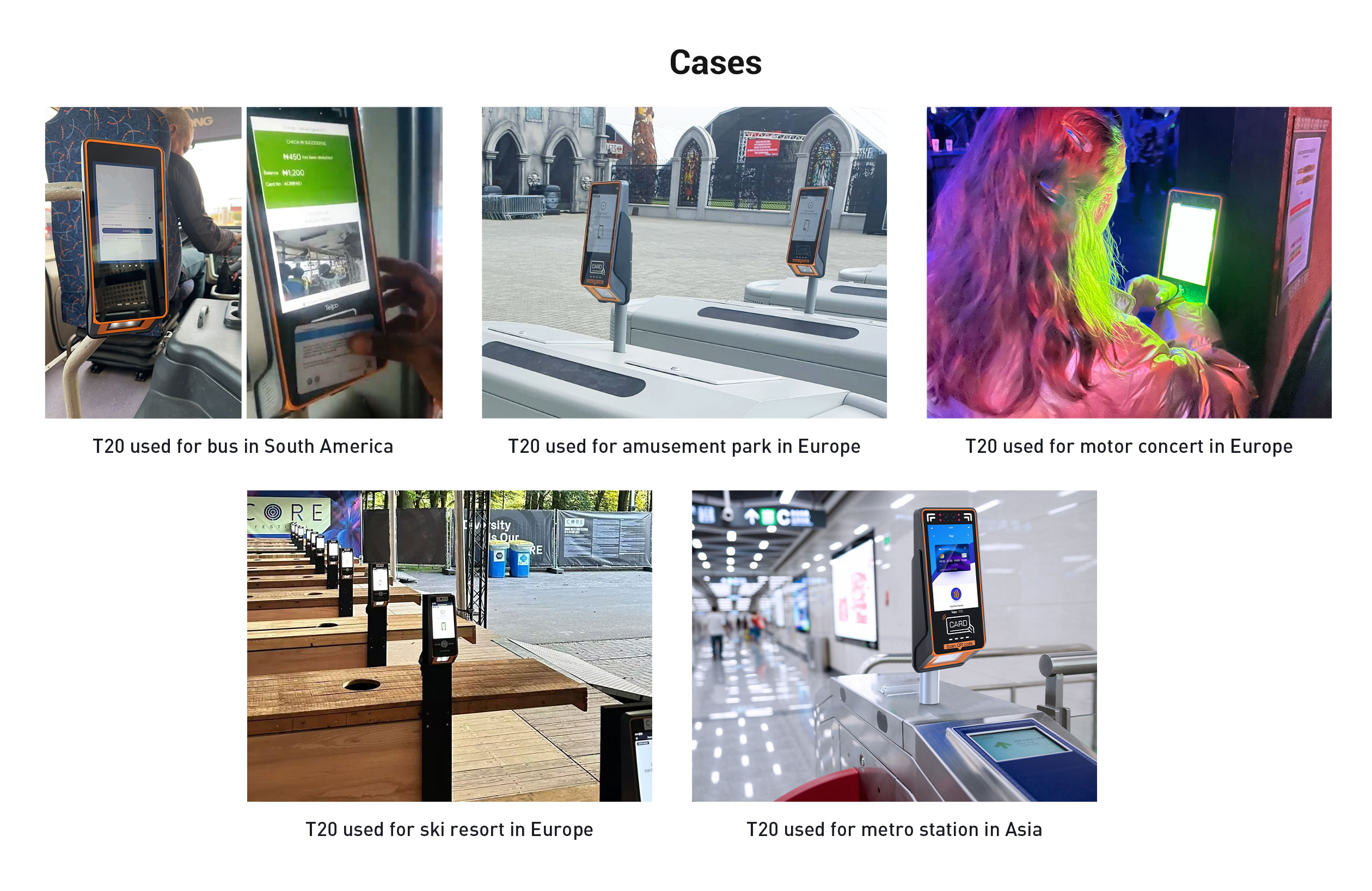
How to select suitable devices for the bus pass service system
When selecting suitable devices for a Bus Pass service system, several key factors should be considered:
1. Based on the available payment options
Identify the required payment functionalities, such as accepting open-loop/closed-loop card payments or mobile payments like NFC or QR code. Ensure that the chosen devices support the desired payment methods and are compatible with relevant payment service providers.
2. Based on the deployment environment, whether indoor or semi-outdoor
Consider the devices’ adaptability and durability based on the deployment environment of the Bus Pass system. If the devices will be placed indoors or in semi-outdoor settings, ensure they have features such as waterproofing, durability, and dust resistance to withstand various weather and environmental conditions. Rigorous Quality Testing: Uncover Telpo T20’s Quality Reliability
3. Based on the development system
Consider the development requirements and technical specifications of the Bus Pass system. Determine the preferred development system, such as the commonly used Android or Linux operating systems. Choose devices that are compatible with the selected development system to ensure smooth development and integration processes.
Other factors to consider
- Language support: Ensure that the devices support the required languages to accommodate user interface and interaction preferences.
- Development capabilities: Assess your development capabilities and resources to determine whether you require devices that are easy to develop and customize or if you need a vendor that provides development tools and support.
- Price and cost: Consider the price and cost-effectiveness of the devices based on budget constraints and expected return on investment. Look for devices that offer a suitable price range and feature combination.
It is recommended to communicate and consult with device vendors to obtain specific advice and customised solutions.
The Telpo T20 card reader has been chosen to participate in the upgrade of Brazil’s metro system and to enhance the smart ticket verification process in Brazilian public transportation. With its advanced features and compatibility, the Telpo T20 card reader enhances the fare collection process, improves overall system performance, and paves the way for future technological advancements in the industry.
Related sharing: Case Share | Telpo Validator T20 Is Improving Public Transport Efficiency In South America
Which Telpo Bus Pass Scanner Is Right for Your Network? T10 vs T20
| Dimension | Telpo T10 | Telpo T20 |
| Product Type | Compact Bus Card Reader | Full-Featured Ticket Validator |
| Display | 5.5″ touchscreen, 500 cd/m², anti-glare | 7″ touchscreen, 500 cd/m², anti-glare |
| OS | Telpo OS (Android 12) | Telpo OS (Android 12) / Linux (optional) |
| Closed-Loop Cards | ISO14443 A/B, Mifare, Cipurse, Calypso, Felica | ISO14443 A/B, Mifare, Cipurse, Calypso, Felica |
| Open-Loop / Bank Cards | EMV Contactless L1, Paywave, Paypass | EMV Contactless L1, Paywave, Paypass |
| QR / Mobile Payments | ✔ QR code + e-wallet | ✔ QR code + e-wallet |
| Paper Ticket Validation | ✔ | ✔ |
| Barcode Formats | QR, Aztec, 1D barcodes (hard decoding) | QR, Aztec, 1D barcodes |
| Impact Protection | IK07 | IK08 |
| Dust & Water Protection | IP54 (optional) | IP65 (standard) |
| Best For | Bus networks, regional rail, event access control, turnstile gate applications across diverse transit environments | Metro stations, high-traffic transit hubs, AFC-integrated networks requiring higher durability and larger display |
Quick Decision Guide
FAQ