
If you want to know what it the major significant factor in fighting against financial crime and money laundering today, KYC (Know Your Customer) should be an indispensable one. As customer identification is the first step in every process, it could be said to be the most crucial aspect.

The global anti-money laundering (AML) and countering the financing of terrorism (CFT) patterns put the financial institutions at tremendous risk. Under such circumstances, some countries have adopted KYC as a preventive measure for client identification. In today’s digital era, with booming online transactions and cross-border activities, the importance of KYC becomes even more prominent to protect the whole financial ecosystem from being exploited by criminals.
What Is KYC?
KYC is the abbreviation of Know Your Customer or Know Your Client. It is the mandatory process to identify and verify the identity of clients before transaction. It can effectively deter criminal behavior like illicitly embezzle user information and use it to make illegal activities or money laundering in bank, and better protect user account and capital security. KYC system is used in banks, financial instructions and many other industries according to local government guidelines and regulations.
For example, in cryptocurrency exchanges, payment platforms, insurance companies, real estate sectors and even gaming industries, KYC solution helps to confirm real identities through documents, biometrics or other methods, making sure no anonymous account is opened for suspicious purposes.
What Is The Customer Due Diligence Measure?
Customer due diligence is the procedure to build trust with the client and assess associated risk, which can be performed at three levels include simplified due diligence, basic due diligence and enhanced due diligence. In a bank, the frame of the KYC policy will contain customer policy, customer identification procedures (data collection, ID card identification, document verification, sanction lists check, etc.), risk assessment and management and ongoing monitoring and record-keeping.
These steps help institutions to classify clients according to their risk level, such as politically exposed persons (PEPs) or clients from high-risk countries, and apply stricter checks when necessary. With proper CDD, banks and financial companies can detect unusual behaviors early and take actions to prevent potential threats.

What are the Advantages of KYC?
- Better build trust in the customer profile
- Clearly understand the nature of client activities
- Strengthen fraud and loss protection
- Mitigate risk associated with money laundering
- Standardize onboarding process
- Makes it easy to monitor the customer behavior based on the risk profile
Besides the above points, KYC solution also helps institutions to improve operational efficiency by reducing manual errors in verification, speed up customer onboarding with digital methods, and enhance overall reputation as a secure and compliant partner in the market.
What Are The Challenges in Implementing KYC?
Although KYC brings many benefits, there are still some challenges.
- For example, lengthy verification processes may cause customer impatience and drop-off during onboarding. Handling large amounts of personal data also raises privacy concerns, especially under regulations like GDPR.
- Moreover, keeping up with changing rules in different countries requires continuous updates to policies and systems, which may increase costs for smaller institutions.
- However, with advanced technologies like biometrics and automation, these challenges can be effectively addressed to make KYC more user-friendly and efficient.
The Future of KYC: Trends and Innovations
In the future, KYC will keep evolving with technology. Digital KYC (eKYC) using AI, machine learning and blockchain is becoming popular, allowing faster and contactless verification through mobile apps or online platforms. Biometric methods such as facial recognition and fingerprint scanning are widely adopted for higher security. Some institutions even explore collaborative KYC platforms to share verified data securely, reducing repeated work while protecting privacy. As digital currencies and DeFi grow, more adaptive KYC measures will be needed to handle new risks.
How Can Telpo Help KYC Solution?
With strong experience in ID verification for governments, banks, operators, and biometric companies, Telpo can provide a professional identification solution that helps comply with the new rules, particularly those regarding CDD (Customer Due Diligence), KYC obligations, and GDPR (General Data Protection Regulation).
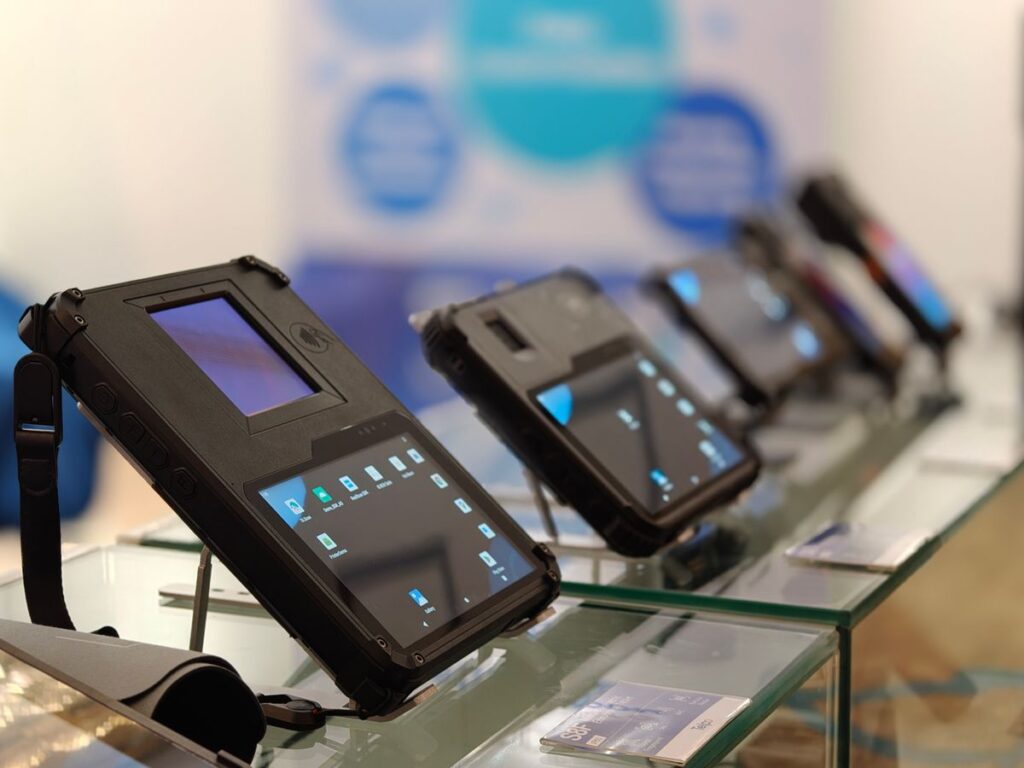
Telpo offers various biometric terminals, such as devices with fingerprint scanners, cameras, facial recognition, and ID card readers, which can quickly and accurately verify identities in banking workflows. For example, our S series biometric terminals support live fingerprint detection, multi-dynamic range technology, and comply with international standards like ANSI-378 and ISO19794, making sure fast, safe and efficient collection of user information. These solutions can integrate encryption to protect data, reduce risks of identity theft, financial fraud and money laundering, and provide a smooth onboarding experience for customers.
If you want more details about how Telpo can customize KYC solution for your bank or financial institution, including suitable configurations for different countries, welcome to contact us directly. For more information, you can also check the Telpo Banking KYC Solution.
Tag: KYC, KYC meaning, KYC Advantages, KYC Challenges, eKYC, CDD, GDPR, AML, CFT, customer due diligence, know your customer, identification, biometric verification, anti-money laundering, financial security
Brief Introduction: Telpo is a professional smart payment partner who focuses on the ODM service for 26 years. It mainly provides the EFT-POS, cash registers, biometric devices, facial recognition machines, self-service kiosks, and bus validators. Telpo has served more than 1000 customers abroad, including government, banks, Telecom operators, police stations, Retail shops, and offices. Telpo adheres to R&D and innovation, aiming to provide more intelligent hardware for global partners.