
A public transport ticketing system operates in some of the most demanding environments commercial electronics face — trains, buses, metro stations, and BRT corridors where passenger volumes are high, operating hours are long, and safety requirements are non-negotiable. For transit authorities and system integrators procuring fare collection hardware in Europe, certifications are not a formality. They are legal prerequisites that determine which products can be considered at all. The Telpo T10 and T20 card credit validators have earned EN 45545, ECE R118, and E24 certifications — a combination that covers the full spectrum of European public transit deployment contexts and gives procurement teams in European markets the compliance documentation their tenders require.
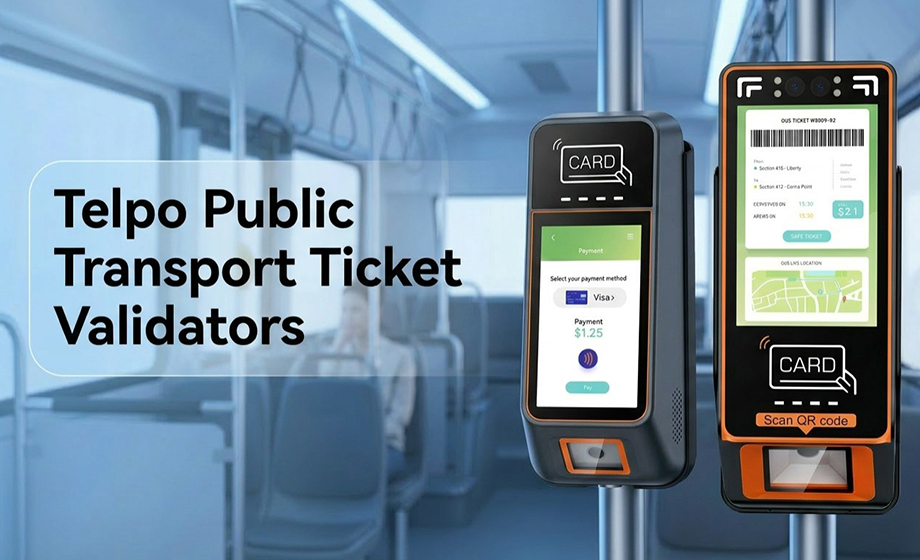
Table of Contents
Why Safety Certifications Define Market Access in Public Transit
In European public transit hardware procurement, certifications serve two functions simultaneously: they are mandatory legal requirements for market entry and independent evidence of product quality that procurement teams can present to operators, regulators, and auditors.
European transit authorities operate under some of the world’s most stringent procurement frameworks. EN 45545 compliance alone can determine whether a device is considered or disqualified before technical evaluation begins. A ticket validator installed on a metro train or city bus is not evaluated in isolation — it is assessed as part of a vehicle safety system where material combustion behavior, smoke generation, and toxic gas release under fire conditions are regulated by law across EU member states.
For manufacturers supplying smart ticketing technology to European and internationally aligned markets, holding the right certifications is the difference between being considered and being excluded before evaluation begins. For system integrators advising transit operators on fare collection systems transportation upgrades, a fully certified device removes a significant layer of compliance risk from the procurement recommendation.
EN 45545: Fire Safety Standard for Public Metro Ticketing Systems
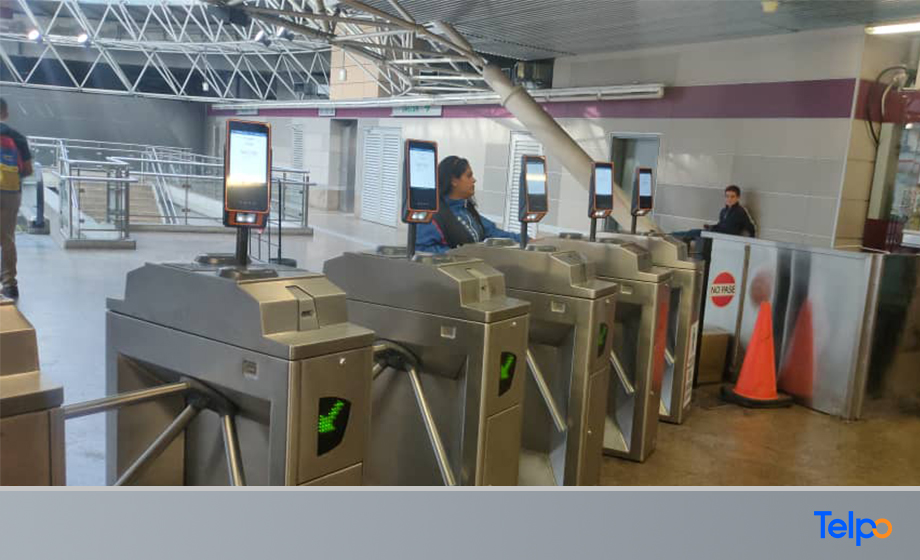
EN 45545 is the European mandatory fire protection standard for railway vehicles, governing the flammability, smoke density, and toxic gas emission of materials used in rolling stock — including electronic devices installed inside trains, trams, and metro carriages.
For ticket validators classified as internal electronic equipment, EN 45545-2 focuses on R22 and R23 requirements. R22 covers internal seals, inductors, coils, and contacts, while R23 addresses printed circuit boards — the core electronic components of a fare validation device. Three measurement parameters determine compliance:
-
Oxygen Index (OI) — the minimum oxygen concentration required for a material to sustain combustion. Higher values indicate better flame resistance
-
Smoke Density (Ds max) — the volume of smoke produced during combustion. Lower values preserve visibility during evacuation
-
Smoke Toxicity (CITNLP) — the concentration of toxic gases released. Lower values reduce harm to passengers and emergency responders
Achieving EN 45545 certification at HL2 or HL3 level carries significant commercial and operational value for a public metro validator deployment in Europe:
-
Market access — EN 45545 compliance is a mandatory requirement for the European rail market. Without it, a ticket validator cannot legally be installed on trains, trams, or metro vehicles in EU member states
-
Passenger protection — certified materials demonstrably limit flame spread, smoke generation, and toxic gas release during a fire event, maximizing evacuation time and reducing casualty risk
-
Operator risk reduction — compliance reduces the legal and financial exposure of transit operators in the event of a fire-related incident involving installed hardware
ECE R118: Combustion Testing for Bus and Road Vehicle Fare Collection Systems
ECE R118 is a UNECE regulation governing the combustion behavior of materials used in motor vehicles, including buses and coaches — covering horizontal burn rate, melting characteristics, and vertical burn rate of internal components.
For bus card payment validators and fare collection hardware installed in road passenger vehicles, ECE R118 certification addresses the specific fire risk profile of bus environments: enclosed passenger cabins, limited evacuation time, and materials that must resist ignition and limit flame propagation under vehicle operating conditions.
The certification’s significance for European transit hardware procurement covers three dimensions. First, it is a mandatory market access requirement across Europe and many internationally aligned regulatory frameworks — a fare collection systems transportation product without ECE R118 compliance cannot be legally installed in certified public transport vehicles in these markets. Second, it provides measurable evidence that the device’s materials behave safely under vehicle fire conditions, directly protecting passengers seated alongside installed validators. Third, it demonstrates regulatory compliance that European transit operators can document for liability, insurance, and audit purposes.
E24: The E-mark Standard for On-Vehicle Electronic Devices

E24 is an E-mark certification issued by Belgium under the UNECE framework, confirming that an electronic device meets the unified technical quality and safety standards required for installation in motor vehicles sold and operated in European and UNECE signatory markets.
E-mark certification is jointly governed by the UNECE and EU directives, covering both whole vehicles and their components. For a card credit validator designed for installation on buses or coaches, E24 certification provides the legal basis for the product to enter and operate in European markets as a vehicle-mounted electronic device — not simply as a standalone terminal.
The procurement value of E24 extends beyond compliance alone. The certification process involves rigorous testing and production consistency audits, meaning the mark confirms not just that a prototype passed a test, but that production-line devices maintain the same performance standards consistently. For European transit authorities procuring at scale, this production consistency assurance is a meaningful quality guarantee alongside the market access it enables.
E24 also carries international recognition beyond EU member states: UNECE signatory countries outside Europe accept E-mark certifications, making it a valuable market access credential for operators procuring hardware for deployment across multiple regions.
What Three Certifications Together Mean for a Best Bus Ticket Machine and Metro Validator
Holding EN 45545, ECE R118, and E24 simultaneously means a bus card payment validator has been independently verified for safe deployment across every major European public transit environment — rail, bus, and road vehicle — under the regulatory frameworks that govern procurement across EU member states and UNECE signatory countries.
Each certification addresses a distinct deployment context:
-
EN 45545 covers rail environments — metro, tram, regional train — where the European rail safety framework applies
-
ECE R118 covers road passenger vehicles — city buses, BRT coaches, long-distance services — where vehicle interior material combustion standards apply
-
E24 covers the device’s status as a vehicle-mounted electronic component, providing the legal and quality foundation for market entry across UNECE signatory countries
Across EU member states and UNECE signatory countries, these three certifications collectively cover the legal requirements for both rail and road vehicle deployments — making them the essential compliance baseline for any supplier targeting European transit contracts. Together, they deliver four compounding benefits for transit operators and system integrators evaluating best bus ticket machine and metro validator options:
-
Comprehensive scenario coverage — a single validator certified for both rail and road environments simplifies procurement for multi-modal European transit networks
-
Elevated safety standards — fire behavior, smoke generation, and toxic gas release have all been independently tested and verified, not self-declared
-
Broadened market access — certified hardware qualifies for procurement tenders across European and internationally aligned transit markets where one or more of these certifications are mandatory
-
Strengthened client trust — internationally recognized certifications provide European transit authorities with auditable compliance evidence, reducing procurement risk and supporting internal approval processes
Telpo T10 vs. Telpo T20: Which Validator Fits Your Deployment
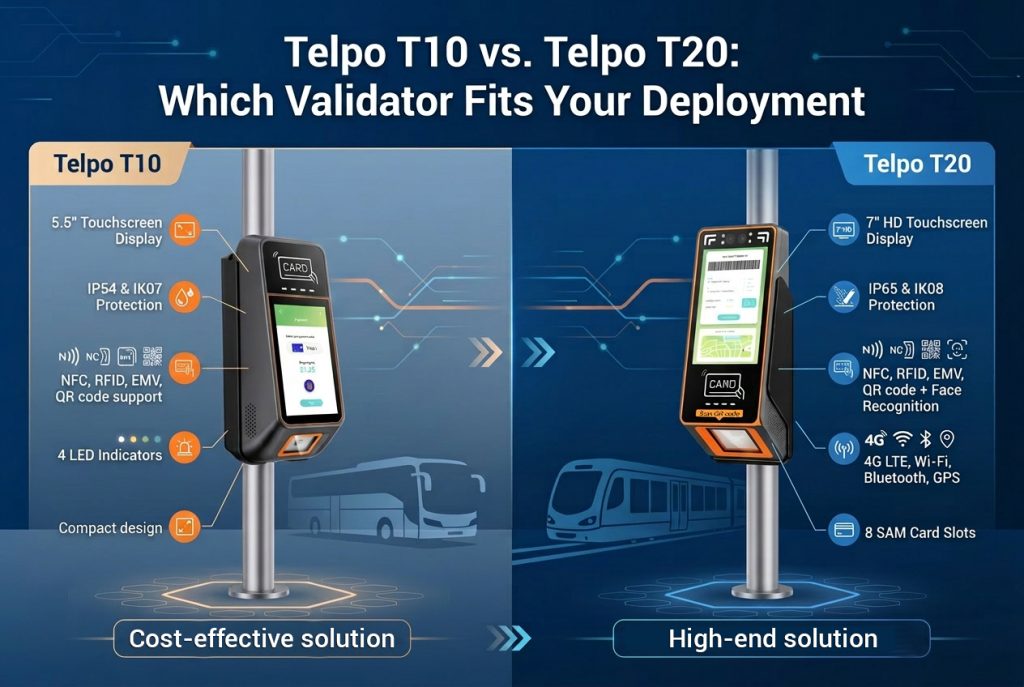
The Telpo T10 and T20 share the same certification foundation but are optimized for different deployment scales, environments, and operational requirements — making the choice between them a function of network type, installation context, and payment system complexity.
| Telpo T10 | Telpo T20 | |
| Form factor | Compact, space-efficient | Larger, feature-rich |
| Display | 5-inch touchscreen, 500 cd/m² anti-glare | 7-inch touchscreen, 500 cd/m² anti-glare |
| Best for | Buses, minibuses, BRT, space-limited installs | Metro stations, BRT hubs, high-volume transit |
| Payment support | EMV contactless, QR code, NFC, mobile wallet | Full open and closed loop, multi-card protocol |
| Card protocols | ISO14443 Type A/B, Mifare, Cipurse, Calypso, Felica | ISO14443 Type A/B, Mifare, Cipurse, Calypso, Felica |
| Connectivity | 4G, dual-band Wi-Fi, Bluetooth, GPS, optional external antenna | 4G, dual-band Wi-Fi, Bluetooth, GPS, optional external antenna |
| Protection rating | IK07, IP54 (Optional) | IP65, IK08 |
| Installation | Pole mount, vehicle mount | Pole mount, turnstile integration, barrier control |
| Target client | European city bus operators, regional transit, BRT corridors | European metro authorities, large AFC system integrators |
| Certifications | CE, FCC, RoHS, EN 45545, ECE R118, E24 | CE, FCC, RoHS, EN 45545, ECE R118, E24 |
For operators running urban bus networks or BRT corridors where compact installation and reliable bus card payment processing are the primary requirements, the transit reader T10 is the efficient, proven choice. For metro authorities, large transit hubs, and AFC system integrators who need barrier integration, advanced card protocol support, and higher environmental protection ratings, the Telpo T20 provides the full-featured platform.
Smart Ticketing Technology and Open-Loop Payment Support
Both the T10 and T20 support open-loop payment systems alongside closed-loop transit credentials — a capability that is increasingly becoming a baseline requirement for modern European public transport ticketing system deployments.
Open-loop acceptance allows passengers to pay directly with their bank card or mobile wallet, without requiring a transit-specific card or app. For European transit operators, this eliminates the infrastructure cost of issuing and managing proprietary cards while broadening the passenger base who can access the network without prior registration — a particularly relevant consideration as European cities push toward frictionless, interoperable urban mobility.
For a deeper look at how Telpo validators support open-loop implementation in practice, see Telpo validators support open-loop payment system — covering the technical and operational considerations for transit authorities making the transition from closed to open-loop fare collection.
The afc hardware and bus ticket checker capabilities of the T20 make it particularly well suited to network-wide AFC deployments where open-loop and closed-loop credentials must coexist across the same validator fleet.
Telpo’s validator deployments in Europe are already demonstrating what certified smart ticketing technology looks like in practice. Telpo T10 Innovate German Public Transit Digitalization shows how Telpo hardware is supporting the digital transformation of public transit in one of Europe’s most demanding transit markets — providing a concrete reference point for European transit authorities and system integrators evaluating T10 and T20 deployments.
Telpo’s Commitment to Safe and Inclusive Public Mobility
Pursuing EN 45545, ECE R118, and E24 certifications reflects a deliberate commitment to building hardware that meets the safety standards of the most demanding European transit environments — not just the minimum requirements of markets where compliance is easiest to achieve.
Public transport serves everyone: daily commuters, elderly passengers, schoolchildren, and tourists unfamiliar with local systems. The hardware installed in these networks carries a responsibility that goes beyond transaction processing. When a ticket validator is installed on a train or bus, the safety behavior of its materials in a fire event is not a technical footnote — it is a direct contributor to whether passengers have time to evacuate safely.
Telpo’s investment in comprehensive certification across both rail and road vehicle standards is the operational expression of that responsibility — one that European transit authorities, system integrators, and passengers can verify through independent test results rather than manufacturer claims.
Conclusion
EN 45545, ECE R118, and E24 certifications are not interchangeable — each addresses a specific transit environment and regulatory framework. Holding all three means the Telpo T10 and T20 are verified for deployment across the full range of European public transit contexts, removing compliance uncertainty from procurement decisions and providing the auditable safety evidence that European tenders increasingly demand.
For transit authorities and system integrators evaluating their next public transport ticketing system — whether for a metro expansion, a bus fleet upgrade, or a multi-modal AFC rollout across European networks — the certification stack of the T10 and T20 provides the compliance foundation the procurement process requires.
Explore the Telpo T10 bus card reader and Telpo T20 afc hardware specifications to find the right validator for your network, or contact the Telpo team to discuss certification documentation and deployment requirements for your project.
FAQ
Q1: What is the difference between EN 45545 and ECE R118, and which certification does a bus ticket validator need?
EN 45545 and ECE R118 cover different vehicle types and regulatory frameworks. EN 45545 is the European mandatory fire protection standard for railway vehicles — trains, trams, and metro carriages — and is required for any electronic device installed in rolling stock operating in European rail networks. ECE R118 is a UNECE regulation covering combustion behavior of materials in motor vehicles, including buses and coaches. A bus ticket validator deployed on road passenger vehicles requires ECE R118 compliance. A metro or rail validator requires EN 45545. For multi-modal European transit networks deploying the same hardware across both environments, holding both certifications — as the Telpo T10 and T20 do — eliminates the need for separate certified devices per vehicle type.
Q2: How does open-loop payment support change the business case for a public transport ticketing system upgrade in Europe?
Open-loop payment support allows passengers to tap their bank card or mobile wallet directly at the validator, without a transit-specific card or app. For European transit operators, this removes the cost of issuing and managing a proprietary card scheme while expanding network accessibility to occasional riders, tourists, and new passengers who would not register for a dedicated transit card. The business case improvement comes from both sides: lower infrastructure and card management costs on the operator side, and higher ridership potential from removing the registration barrier on the passenger side. For fare collection systems undergoing transition from closed to open-loop, a validator certified for both payment architectures enables a phased rollout without replacing the hardware fleet.
Q3: What should a European transit authority look for when comparing smart ticketing technology validators for a metro or BRT deployment?
European transit authorities comparing validators for metro or BRT deployment should evaluate five criteria. First, the full certification set — EN 45545 for rail, ECE R118 and E24 for road vehicles — to confirm the device meets mandatory European market requirements without exceptions. Second, payment protocol breadth — open-loop bank card acceptance alongside closed-loop transit credentials covers the full passenger credential spectrum. Third, protection rating — IP65 and IK08 for high-footfall outdoor or semi-outdoor environments. Fourth, barrier and AFC integration capability for metro deployments requiring gate control. Fifth, connectivity including 4G, dual-band Wi-Fi, GPS, and optional external antenna support to ensure reliable data transmission across the full route network.