
From May 12 to 15, Telpo joined government agencies, identity experts, and technology partners at ID4Africa 2026 in Côte d’Ivoire — one of the continent’s most important forums for digital identity and public service innovation. Under the theme “Anchoring the Digital Ecosystem with Trusted Biometrics,” Telpo demonstrated how a wireless biometric machine built for real field conditions can turn identity strategy into scalable, practical deployment. As African governments and enterprises accelerate digital transformation, the demand for reliable biometric enrollment, secure authentication, and intelligent transit systems has never been more urgent.
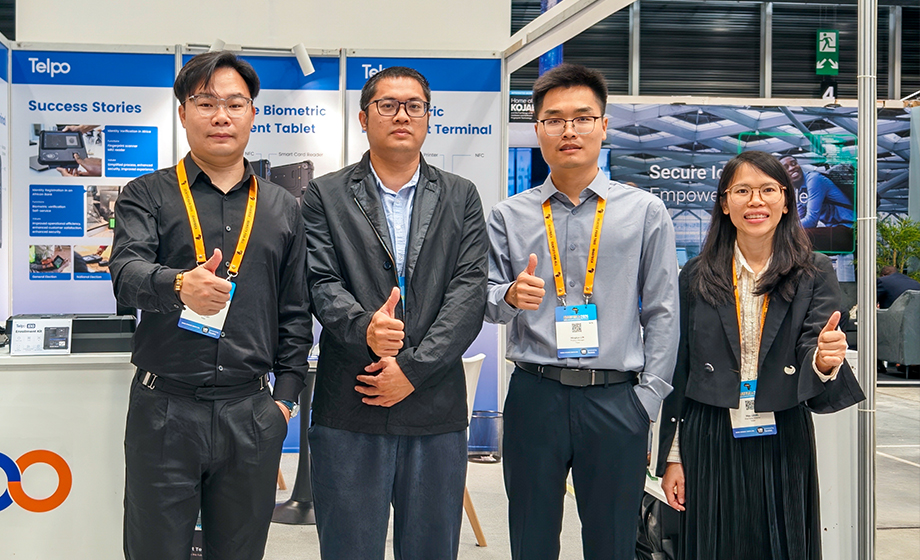
Table of Contents
Why Android Biometric Machines Are Now Central to Digital Transformation
Biometric identity verification has moved from a government-only concern to a foundational requirement across banking, transportation, public services, and enterprise security. The hardware enabling it must be portable, field-ready, and deployable at scale.
Across Africa and emerging markets, millions of citizens are being enrolled in national ID programs, voter registration systems, and financial inclusion initiatives for the first time. These programs share a common challenge: identity verification must happen in the field, often without fixed infrastructure, reliable power, or consistent network connectivity. An android biometric machine that works reliably in these conditions is not a convenience — it is a prerequisite for program success.
At the same time, organizations in banking, retail, and transportation are integrating biometric authentication into everyday service touchpoints. Fingerprint liveness detection, iris recognition, and NFC-based identity checks are increasingly embedded in payment terminals, access control systems, and transit validators — extending the reach of trusted identity beyond enrollment centers and into daily life.
Telpo Biometric Enrollment Tablets for Secure National ID and Government Programs
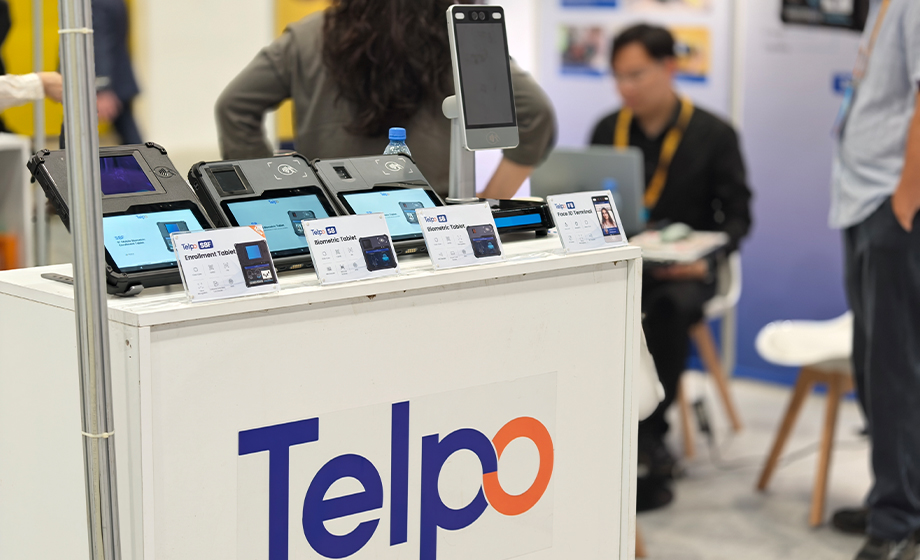
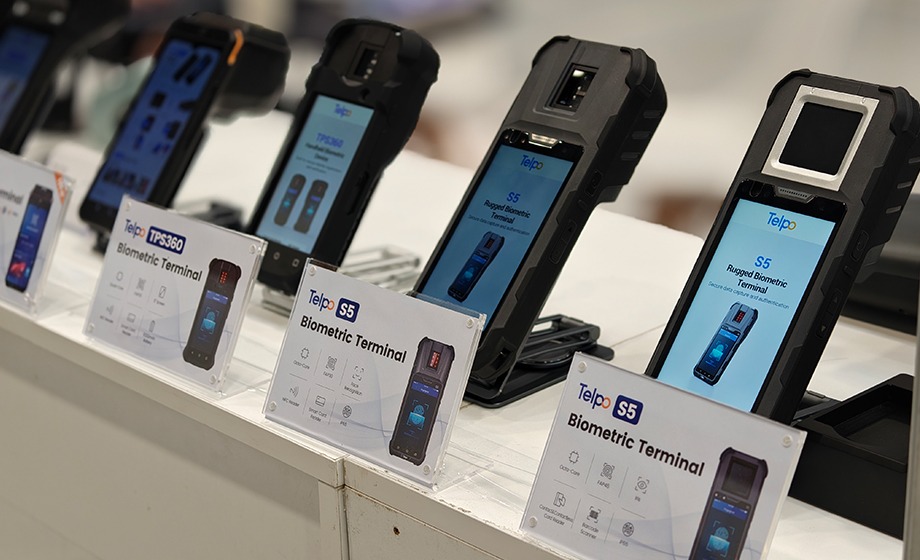
Telpo’s multimodal biometric tablet series — S8, S8F, and S10 — are purpose-built for high-volume identity enrollment programs, combining rugged construction with flexible fingerprint capture and advanced identity verification in a single device.
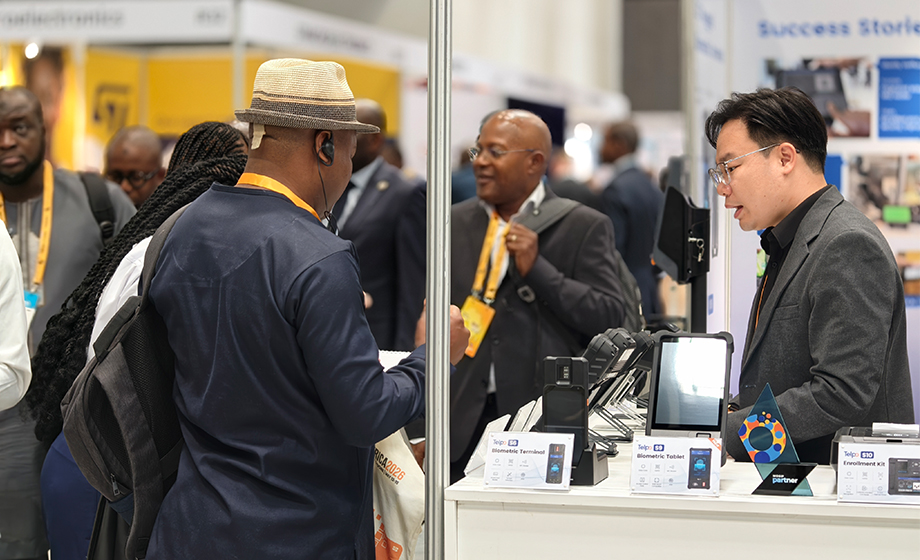
At ID4Africa 2026, these devices drew significant attention from government delegations and system integrators evaluating hardware for national-scale programs. Each device integrates FAP-certified fingerprint readers at different capture levels — FAP20, FAP30, FAP45, and FAP60 — supporting everything from single-finger capture to full ten-print enrollment in a single session.
Beyond fingerprint collection, the series supports a comprehensive set of identity verification functions:
-
Fingerprint recognition with fingerprint liveness detection to prevent spoofing
-
Iris recognition for contactless identity verification
-
Facial recognition for photo-based identity matching
-
ID card and license reading — both contact and contactless formats
Telpo S8 and S8F: Rugged Enrollment for Demanding Field Programs
The S8 biometric tablet is built for sustained operation in challenging field environments. Its rugged construction withstands the physical demands of mobile deployment teams working across diverse terrain — a critical specification for national ID registration, voter enrollment, and social welfare programs where devices are carried and used continuously across long field days.
The S8F biometric enrollment tablet extends this capability with facial recognition integration, making it suitable for programs that require both fingerprint and face-based identity capture in a single device interaction — reducing enrollment session time and improving data completeness.
Telpo S10: A Complete Biometric Enrollment Kit
The S10 biometric enrollment kit is designed for organizations that need a comprehensive, self-contained enrollment solution. Whether deployed as a rugged enrollment station or a compact endroid biometric machine for field teams, the S10 covers the full range of program requirements without requiring separate device categories — making it the preferred platform for border control, enterprise identity management, and examination security environments where multiple verification methods must be available at a single station.
Telpo S9: A Wireless Biometric Attendance Machine for Access Control and Field Verification
The Telpo S9 is a compact wireless biometric attendance machine equipped with a FAP20-certified fingerprint scanner and NFC reader, designed for flexible deployment across government offices, border checkpoints, examination centers, and enterprise access control scenarios.
The S9’s dual installation modes — handheld operation and wall mounting — give deployment teams the flexibility to configure the device for the scenario at hand. In a government office or border checkpoint, the S9 mounts at the entry point for continuous access control and identity checking. In an event security or examination center context, it operates as a handheld device that staff carry to the point of verification rather than directing people to a fixed terminal.
For organizations building identity infrastructure across multiple site types, the S9 eliminates the need for separate device categories for fixed and mobile use cases — a meaningful operational and procurement simplification.
Telpo P9: A POS Terminal with Biometric for Banking and Retail Payment
The Telpo P9 is a flagship smart payment terminal that integrates fingerprint authentication directly into the payment workflow — making it a true POS terminal with biometric capability for banks, retail chains, and financial service operators.
In banking and retail environments, the convergence of payment and identity verification is accelerating. Customers expect transactions to be fast, merchants need them to be secure, and regulators require compliance with increasingly stringent authentication standards. The P9 addresses all three simultaneously.
As a fully capable P9 android pos machine, it supports magnetic card, smart card, NFC, QR code, and e-wallet payments alongside fingerprint-based customer authentication. The dual-screen display keeps transaction details visible to both operator and customer throughout the interaction. For financial institutions expanding into underserved markets — a central theme at ID4Africa 2026 — the P9 represents a single device that handles payment acceptance, identity verification, and customer engagement at one service counter.
Telpo T10: A Compact Bus Card Reader for Smart Transportation
The Telpo T10 is a compact transit validator designed for space-constrained transportation environments, combining strong display readability with flexible deployment across buses, minibuses, and ticket gates.
Urban transit systems across Africa are modernizing fare collection infrastructure, shifting from cash-dependent operations to digital ticketing and contactless payment. The T10 Bus Card Reader addresses the practical constraints of this transition: its compact form factor fits the limited mounting space available in vehicles, while its 500 cd/m² screen brightness ensures clear readability in semi-outdoor conditions where glare and variable lighting are constant factors.
For transport operators, the T10 supports digital ticketing, smart mobility integration, and more efficient passenger flow management — delivering the operational benefits of fare digitization without the installation complexity that larger validator hardware typically requires.
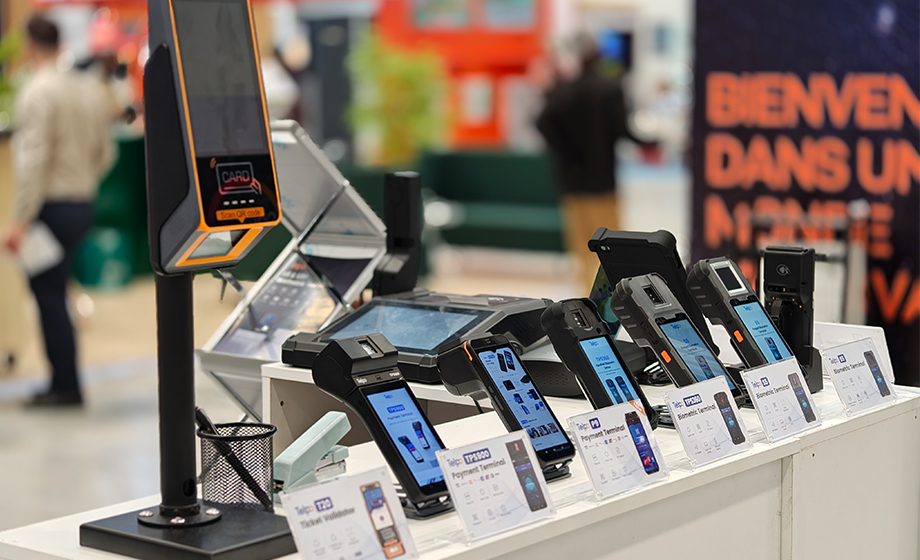
How Trusted Terminal Hardware Connects Digital Identity, Payment, and Mobility
The common thread across Telpo’s ID4Africa 2026 portfolio is not the technology itself — it is the principle that a trusted digital ecosystem requires reliable, field-ready hardware at every access point where people, services, and data connect securely.
At ID4Africa, visitors from government agencies, financial institutions, transport operators, and system integrators explored how Telpo’s terminal portfolio maps across the key scenarios driving digital transformation:
-
Government services — biometric enrollment tablets for accurate citizen registration and national ID programs
-
Public safety — portable wireless biometric attendance machines for mobile enforcement and field identity verification
-
Elections — multimodal biometric devices supporting voter authentication and identity risk reduction
-
Banking and retail — POS terminals with biometric for connecting secure payments with identity authentication
-
Transportation — compact bus card readers and transit validators for smart mobility and efficient fare collection
Each scenario places different demands on hardware — in form factor, modality, connectivity, and durability. Telpo’s portfolio at ID4Africa 2026 demonstrated that these demands can be met with a coherent device ecosystem rather than a collection of unrelated point solutions.
Conclusion
Telpo’s participation in ID4Africa 2026 in Côte d’Ivoire was a clear demonstration of where trusted biometrics are heading: deeper integration across identity, payment, and mobility infrastructure, delivered through hardware that is wireless, portable, and built for the realities of field deployment.
From the multimodal android tablet with fingerprint sensor and workstation biometric device for national identity programs, to the payment terminal machine for financial service environments and the transit reader for urban transit modernization, Telpo’s wireless biometric machine portfolio addresses the full range of scenarios where digital transformation requires a reliable hardware access point.
For government agencies, system integrators, and enterprise buyers evaluating biometric identity or smart terminal solutions, explore Telpo’s full portfolio of biometric identity terminals, payment solutions, and transit validators — and contact the Telpo team to discuss deployment requirements specific to your program or market.
FAQ
Q1: What is the difference between a wireless biometric attendance machine and a standard fingerprint terminal for government field programs?
A wireless biometric attendance machine operates without dependency on fixed wired infrastructure, supporting deployment in field locations, mobile enforcement scenarios, and sites without stable power or network access. Unlike a standard fingerprint terminal fixed to a wall or counter, a wireless device can function handheld, mount flexibly across site types, and maintain connectivity via 4G or Wi-Fi. For national ID registration, voter enrollment, and social welfare programs where verification must happen at the point of need, this portability is a fundamental program requirement rather than an optional convenience.
Q2: How does a POS terminal with biometric differ from a standard payment terminal, and when does it make sense for a bank to deploy one?
A POS terminal with biometric integrates fingerprint authentication directly into the transaction workflow, allowing financial institutions to verify customer identity at the point of payment rather than relying solely on card or PIN-based methods. For banks expanding into underserved markets or complying with stricter KYC requirements, this capability transforms the payment terminal from a transaction device into a secure service entry point. It makes particular sense when the bank needs to handle both payment processing and customer identity verification at the same counter — reducing the number of devices required and streamlining the service interaction.
Q3: What should procurement teams look for when choosing a biometric enrollment tablet for a national ID or voter registration program?
Procurement teams evaluating biometric enrollment tablets for large-scale government programs should prioritize three criteria. First, FAP certification level — FAP30, FAP45, or FAP60 — which determines fingerprint image quality and suitability for interoperability with national identity databases. Second, field durability and wireless connectivity — devices must sustain continuous operation across long deployment days in environments without reliable power or fixed network access.